 Live Science Plus





You are now subscribed
Your newsletter sign-up was successful
Want to add more newsletters?

Delivered Daily
Daily Newsletter
Sign up for the latest discoveries, groundbreaking research and fascinating breakthroughs that impact you and the wider world direct to your inbox.
Once a week
Life's Little Mysteries
Feed your curiosity with an exclusive mystery every week, solved with science and delivered direct to your inbox before it's seen anywhere else.
Once a week
How It Works
Sign up to our free science & technology newsletter for your weekly fix of fascinating articles, quick quizzes, amazing images, and more

Delivered daily
Space.com Newsletter
Breaking space news, the latest updates on rocket launches, skywatching events and more!

Once a month
Watch This Space
Sign up to our monthly entertainment newsletter to keep up with all our coverage of the latest sci-fi and space movies, tv shows, games and books.

Once a week
Night Sky This Week
Discover this week's must-see night sky events, moon phases, and stunning astrophotos. Sign up for our skywatching newsletter and explore the universe with us!
Join the club
Get full access to premium articles, exclusive features and a growing list of member rewards.
Scientists find that moms consistently rank the stink of their baby's "number two" as No. 1.
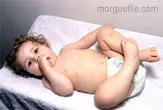
In a new study, 13 mothers were asked to sniff soiled diapers belonging to both their own child and others from an unrelated baby. The women consistently ranked the smell of their own child's feces as less revolting than that of other babies.
One possible explanation is that the mothers were simply more accustomed to their their baby's stink and therefore found it less repulsive. A more intriguing possibility, the researchers say, is that the mothers' reactions are an evolutionary adaptation allowing them to overcome their natural disgust so that they can properly care for their babies.
The study, led by Trevor Case of Macquarie University in Australia, will be detailed in an upcoming issue of the journal Evolution and Human Behavior.
Disgust helps protect us from things that can make us sick, scientists say, but there are circumstances in which the emotion has to be tempered. The caring of an infant is likely one such instance.
"A mother's disgust at her baby's feces has the potential to obstruct her ability to care for her baby and may even affect the strength of the bond she has with her baby," the researchers write.
The finding is among the latest in a series of studies suggesting that humans can determine biological relatedness through body odor. Another recent study found that mothers more accurately identify and prefer the smell of their biological children over that of stepchildren.
