 Live Science Plus





You are now subscribed
Your newsletter sign-up was successful
Want to add more newsletters?

Delivered Daily
Daily Newsletter
Sign up for the latest discoveries, groundbreaking research and fascinating breakthroughs that impact you and the wider world direct to your inbox.

Once a week
Life's Little Mysteries
Feed your curiosity with an exclusive mystery every week, solved with science and delivered direct to your inbox before it's seen anywhere else.
Once a week
How It Works
Sign up to our free science & technology newsletter for your weekly fix of fascinating articles, quick quizzes, amazing images, and more

Delivered daily
Space.com Newsletter
Breaking space news, the latest updates on rocket launches, skywatching events and more!

Once a month
Watch This Space
Sign up to our monthly entertainment newsletter to keep up with all our coverage of the latest sci-fi and space movies, tv shows, games and books.

Once a week
Night Sky This Week
Discover this week's must-see night sky events, moon phases, and stunning astrophotos. Sign up for our skywatching newsletter and explore the universe with us!
Join the club
Get full access to premium articles, exclusive features and a growing list of member rewards.
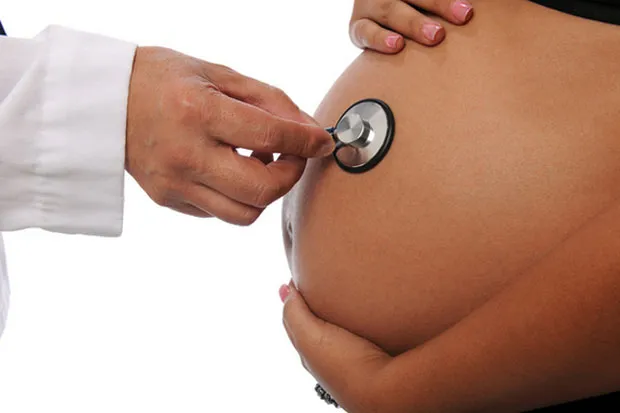
Women who are obese during pregnancy may be at increased risk of giving birth too early, a new study from Sweden suggests.
In the study, obese women were more likely than normal-weight women to give birth to extremely premature babies — those born between 22 and 27 weeks of pregnancy. (Pregnancy typically lasts 40 weeks.)
In addition, the more obese a woman was, the greater her risk of preterm birth was, the study found. For women with severe obesity — defined as having a body mass index (BMI) between 35 and 39.9 — the risk doubled, and for women with extreme obesity (a BMI of 40 or higher), the risk was triple that faced by normal-weight women (those with a BMI between 18.5 and 24.9).
Although these increases in risk were considerable, very few babies are born this prematurely. Most obese women in the study did not give birth to extremely premature babies.
In the study, extremely premature birth occurred in 0.17 percent of normal-weight women, 0.21 percent of overweight women, 0.27 percent of mildly obese women, 0.35 percent of severely obese women and 0.52 percent of extremely obese women.
Still, "considering the high morbidity and mortality among extremely preterm infants, even small absolute differences in risks will have consequences for infant health and survival," the researchers wrote in the June 12 issue of the Journal of the American Medical Association.
The study found an association, and cannot prove a cause-effect link between obesity and premature birth. However, the findings agree with the results of previous studies that have also shown such a link.
Obesity is known to increase the risk of "medically indicated" premature birth — that is, premature birth that is deliberately initiated by doctors, with a cesarean section or by inducing labor. This is because obesity increases the risk of medical disorders in pregnancy, such as preeclampsia and gestational diabetes.
However, the new study also found a link between severe obesity and spontaneous extremely premature birth.
The study examined information from more than 1.5 million births in Sweden between 1992 and 2010. Overall, about 5 percent of babies were born prematurely (before 37 weeks of pregnancy), including 4.36 percent who were moderately premature (between 32 and 36 weeks), 0.47 percent who were very premature (between 28 and 31 weeks) and 0.23 percent who were extremely premature.
The findings still need to be confirmed in other populations, the researchers said.
Because obesity in pregnancy can increase the risk of health problems for the mother and the baby, experts recommend that obese women limit their weight in pregnancy. The Institute of Medicine recommends normal-weight women gain 25 to 35 lbs. during pregnancy, overweight women gain 15 to 25 lbs. and obese women gain 11 to 20 lbs.
Follow Rachael Rettner @RachaelRettner. Follow LiveScience @livescience, Facebook & Google+. Original article on LiveScience.com.

