 Live Science Plus





You are now subscribed
Your newsletter sign-up was successful
Want to add more newsletters?

Delivered Daily
Daily Newsletter
Sign up for the latest discoveries, groundbreaking research and fascinating breakthroughs that impact you and the wider world direct to your inbox.
Once a week
Life's Little Mysteries
Feed your curiosity with an exclusive mystery every week, solved with science and delivered direct to your inbox before it's seen anywhere else.

Once a week
How It Works
Sign up to our free science & technology newsletter for your weekly fix of fascinating articles, quick quizzes, amazing images, and more

Delivered daily
Space.com Newsletter
Breaking space news, the latest updates on rocket launches, skywatching events and more!

Once a month
Watch This Space
Sign up to our monthly entertainment newsletter to keep up with all our coverage of the latest sci-fi and space movies, tv shows, games and books.

Once a week
Night Sky This Week
Discover this week's must-see night sky events, moon phases, and stunning astrophotos. Sign up for our skywatching newsletter and explore the universe with us!
Join the club
Get full access to premium articles, exclusive features and a growing list of member rewards.
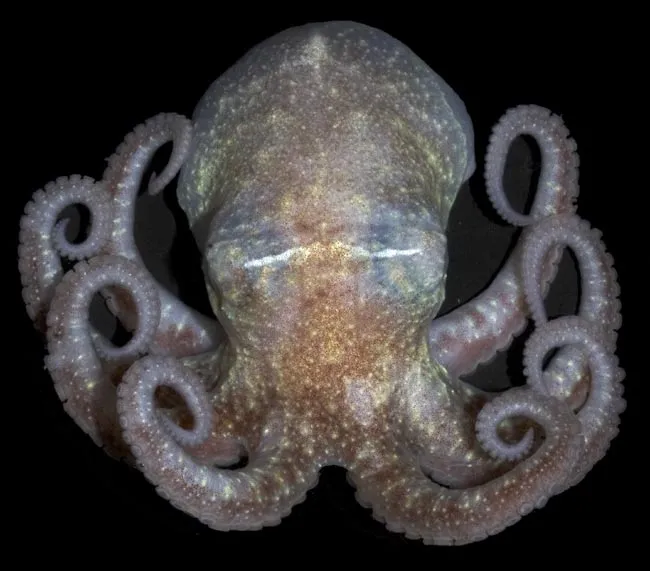
Contrary to what was known, all octopuses are venomous, a new study finds.
Researchers knew that the blue-ringed octopus packed venom. Now they say all octopuses and cuttlefish, and some squid are venomous. In fact they all share a common, ancient venomous ancestor, the study indicates, and the work suggests new avenues for drug discovery.
"Venoms are toxic proteins with specialized functions such as paralyzing the nervous system" said Bryan Fry of the University of Melbourne. "We hope that by understanding the structure and mode of action of venom proteins we can benefit drug design for a range of conditions such as pain management, allergies and cancer."
While many creatures have been examined as a basis for drug development, cephalopods (octopuses, cuttlefish and squid) remain an untapped resource and their venom may represent a unique class of compounds.
Fry obtained tissue samples from cephalopods ranging from Hong Kong, the Coral Sea, the Great Barrier Reef and Antarctica. The team — scientists from the University of Brussels and Museum Victoria — then analyzed the genes for venom production from the different species and found that a venomous ancestor produced one set of venom proteins, but over time additional proteins were added to the chemical arsenal.
The origin of these genes also sheds light on the fundamentals of evolution, presenting a prime example of convergent evolution where species independently develop similar traits.
The team will now work on understanding why very different types of venomous animals seem to consistently settle on the similar venom protein composition, and which physical or chemical properties make them predisposed to be useful as toxin.
"Not only will this allow us to understand how these animals have assembled their arsenals, but it will also allow us to better exploit them in the development of new drugs from venoms," Fry said. "It does not seem a coincidence that some of the same protein types have been recruited for use as toxins across the animal kingdom."
The study was published in the Journal of Molecular Evolution and announced today.
- Deep-Sea Squid Video 1, 2, 3
- The Surprising Origin of Venom Revealed
- Top 10 Deadliest Animals

