What Makes Water Hard?
Get the world’s most fascinating discoveries delivered straight to your inbox.
You are now subscribed
Your newsletter sign-up was successful
Want to add more newsletters?
Delivered Daily
Daily Newsletter
Sign up for the latest discoveries, groundbreaking research and fascinating breakthroughs that impact you and the wider world direct to your inbox.
Once a week
Life's Little Mysteries
Feed your curiosity with an exclusive mystery every week, solved with science and delivered direct to your inbox before it's seen anywhere else.
Once a week
How It Works
Sign up to our free science & technology newsletter for your weekly fix of fascinating articles, quick quizzes, amazing images, and more
Delivered daily
Space.com Newsletter
Breaking space news, the latest updates on rocket launches, skywatching events and more!
Once a month
Watch This Space
Sign up to our monthly entertainment newsletter to keep up with all our coverage of the latest sci-fi and space movies, tv shows, games and books.
Once a week
Night Sky This Week
Discover this week's must-see night sky events, moon phases, and stunning astrophotos. Sign up for our skywatching newsletter and explore the universe with us!
Join the club
Get full access to premium articles, exclusive features and a growing list of member rewards.
In some communities, it takes a lot of soap to properly wash your hands. This occurs in places with "hard" water, where high levels of calcium, magnesium and other alkaline minerals are found in tap water.
Scientists measure the hardness of water using a pH scale, which measures the hydrogen-ion concentration in the liquid. Water with a low pH is more acidic, while water with a higher pH is harder or more alkaline, meaning it is able to neutralize acids.
The pH scale measures substances on a scale from 1 to 14, with 7 being neutral. The U.S. Environmental Protection Agency recommends households have a water pH of between 5.5 and 9. Even within this range, however, hard water causes challenges.
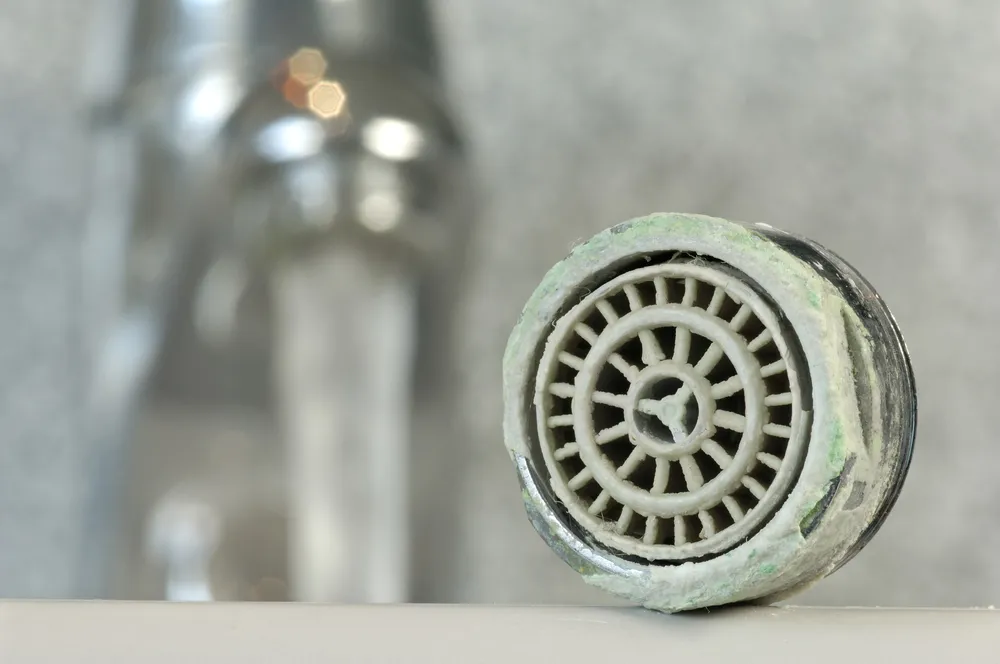
If you have hard water coming from your tap, you need more soap for your hands and detergent for your laundry. If you have an aquarium, certain types of fish will die in hard water. And a buildup of alkaline deposits (aka lime deposits) can damage plumbing and appliances like washing machines and dishwashers.
A water softener works by binding the calcium and magnesium in hard water to a porous resin in the water softening unit, replacing those minerals with sodium chloride or potassium chloride.
In the United States, hard water is often found in streams. Some of the most alkaline waters are in Texas, New Mexico, Kansas, Arizona, and southern California, according to the U.S. Geological Survey. Softer water locations generally include Hawaii, New England and the Pacific Northwest.
Follow LiveScience on Twitter @livescience. We're also on Facebook & Google+.
Get the world’s most fascinating discoveries delivered straight to your inbox.

Elizabeth Howell was staff reporter at Space.com between 2022 and 2024 and a regular contributor to Live Science and Space.com between 2012 and 2022. Elizabeth's reporting includes multiple exclusives with the White House, speaking several times with the International Space Station, witnessing five human spaceflight launches on two continents, flying parabolic, working inside a spacesuit, and participating in a simulated Mars mission. Her latest book, "Why Am I Taller?" (ECW Press, 2022) is co-written with astronaut Dave Williams.