 Live Science Plus






Lemur Twins Arrive at Belfast Zoo
You are now subscribed
Your newsletter sign-up was successful
Want to add more newsletters?

Delivered Daily
Daily Newsletter
Sign up for the latest discoveries, groundbreaking research and fascinating breakthroughs that impact you and the wider world direct to your inbox.

Once a week
Life's Little Mysteries
Feed your curiosity with an exclusive mystery every week, solved with science and delivered direct to your inbox before it's seen anywhere else.

Once a week
How It Works
Sign up to our free science & technology newsletter for your weekly fix of fascinating articles, quick quizzes, amazing images, and more

Delivered daily
Space.com Newsletter
Breaking space news, the latest updates on rocket launches, skywatching events and more!

Once a month
Watch This Space
Sign up to our monthly entertainment newsletter to keep up with all our coverage of the latest sci-fi and space movies, tv shows, games and books.

Once a week
Night Sky This Week
Discover this week's must-see night sky events, moon phases, and stunning astrophotos. Sign up for our skywatching newsletter and explore the universe with us!
Join the club
Get full access to premium articles, exclusive features and a growing list of member rewards.
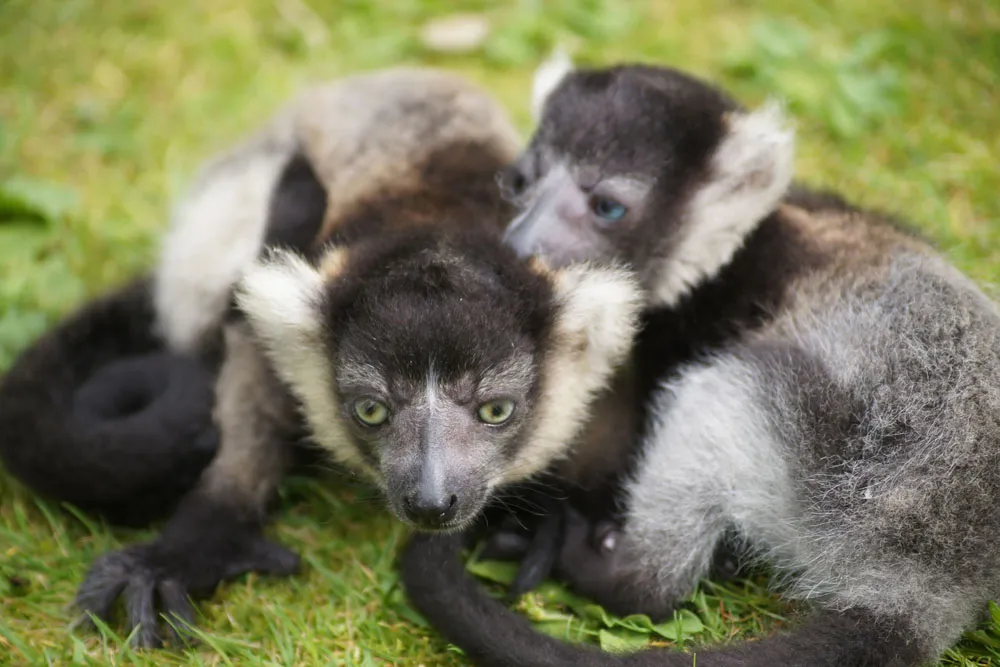
A pair of white-belted ruffed lemur twins has been born at the Belfast Zoological Park in Northern Ireland.
Belfast Zoo first became home to white-belted ruffed lemurs in 2009, when male, Wakka, arrived from Newquay Zoo in Cornwall and female, Mianta, arrived from Beasancon Zoo in France. White-belted ruffed lemurs, including the pair at the Belfast Zoo are part of a European breeding program; Mianta and Wakka welcomed their twins on July 22.
"The whole zoo team is delighted with the new arrivals," said zoo manager Mark Challis. "Although we have bred other species of lemur in the past, including our 'ever popular' ring-tailed lemurs, this is first time that we have bred white-belted ruffed lemurs. They are actually very unusual as young ruffed lemurs do not cling to their mothers, like many other primates. Instead the mother builds a nest to keep the babies safe and she will carry the young in her mouth. However, the twins are now becoming more confident and mischievous and are beginning to explore their enclosure!"
White-belted ruffed lemurs are found on the island of Madagascar, which is home to a diverse range of species, many of which are unique to the island. As the fourth largest island in the world, Madagascar is home to more than 80 different species of lemur. However, Madagascar has one of the most threatened ecosystems on the planet and more than 80 percent of its forests have disappeared since the 1950s, leaving many irreplaceable species in danger of extinction, the zoo noted in a statement.
The International Union for the Conservation of Nature (IUCN) considers this lemur to be facing an extremely high risk of extinction. Deforestation is the main threat facing the white-belted ruffed lemur and they are also hunted for fur, meat and the illegal pet trade.
The arrival of the newborns "is extremely important to the European breeding program for white-belted ruffed lemurs as there are only approximately 50 of these lemurs in captivity, which means that every birth is fundamental to the future survival of these lemurs, Challis said in a zoo statement.
Follow OurAmazingPlanet on Twitter @OAPlanet. We're also on Facebook and Google+.

