
















Photos of Flightless Birds: All 18 Penguin Species

Emperor Penguin

Penguins are a group of non-flying aquatic birds that live in the Southern Hemisphere. They include 18 species 13 of which are either threatened or endangered. With their habitats and food supply under threat from humans and climate change, it could take a major effort to save some of these creatures from extinction.
Clara Moskowitz is a senior writer for LiveScience, a sister site to OurAmazingPlanet.
Galápagos penguins

The Galápagos penguin, endemic to the ((CONLINK|6800|GalÃ
Emperor penguins

Emperor penguins are the largest of the penguin species, and mate and breed on the ice of Antarctica. They make a harrowing trek across up to 75 miles (120 kilometers) of ice to reach breeding colonies during the frigid Antarctic winter. While this life can be rather austere, for now it is sustaining: Emperor penguins are rated of least concern on the International Union for Conservation of Nature (IUCN) Red List of Threatened Species.
Female emperor penguins hatch an egg, and the males incubate it while she forages for food. After chicks are born males and females take turns diving for food and caring for the young.
Humboldt penguins

Humboldt penguins are native to the Southern Hemisphere, but these Humboldts live at Stanley Park in Vancouver, British Columbia, Canada. The species is rated vulnerable to extinction, and has been strongly impacted by El Nino, which changes the water temperature and reduced the amount of food available for the penguins.
African penguins

African penguins, a once robust iconic species in Namibia and South Africa, have experienced a precipitous decline and were recently reclassified as endangered.
Chinstrap penguins

Chinstrap penguins, found on barren islands and large icebergs around Antarctica, are not endangered. This is an adult chinstrap penguin at Cape Shirreff, Livingston Island.
King penguins
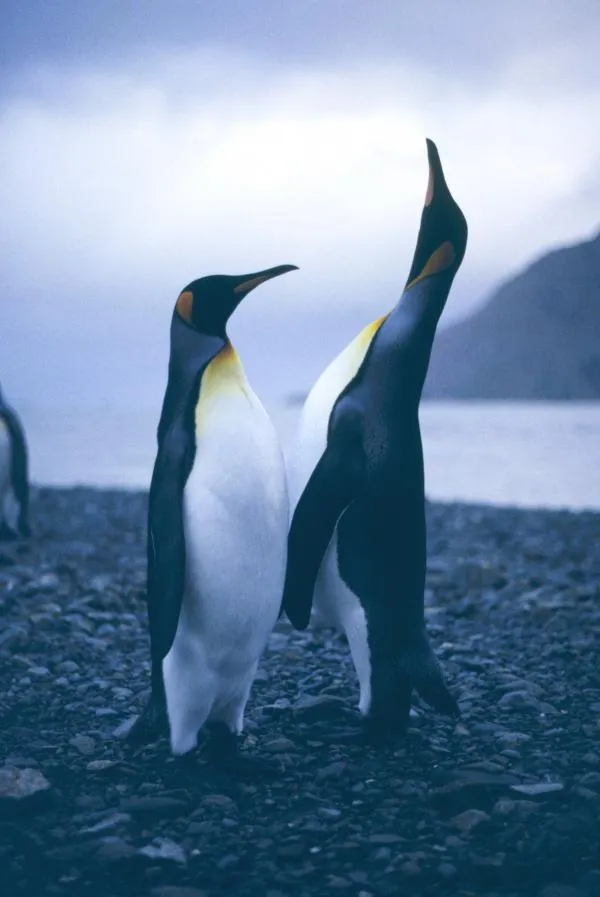
This long-distance forager species is stable, but one study found that their average foraging range has recently doubled, meaning they are having to travel farther to find food. They are the second largest penguin species in the world, following the Emperor.
Get the world’s most fascinating discoveries delivered straight to your inbox.
Magellanic penguins
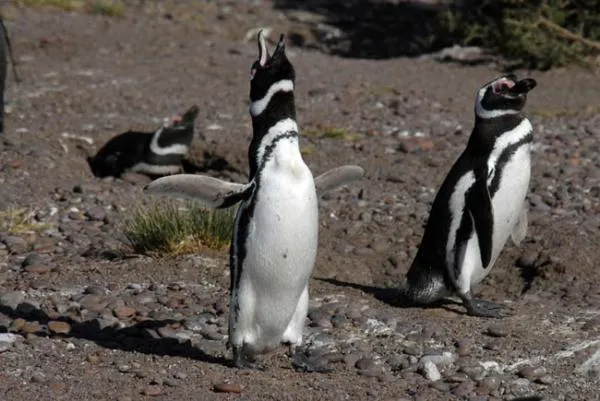
These South American penguins breed in coastal Argentina, Chile and the Falkland Islands. While at one point within the last few decades there were thought to be about 6 million breeding pairs of Magellanic penguins in the wild, now there are estimated to be only 1 million pairs. They are rated near-threatened.
Adelie penguins

These penguins are found on the coast of Antarctica . Here an Adelie penguin nurses its egg.
Rockhopper penguins

Rockhopper penguins include two species the northern and southern rockhopper. The population of northern rockhoppers has declined by 90 percent over the last 50 years, according to a 2009 paper in the journal Bird Conservation International. They have been strongly affected by algal blooms and oil dumping in the oceans, as well as competition for prey with commercial fisheries.
Gentoo penguins

A gentoo penguin on Petermann Island, near the Antarctic Peninsula. Gentoos' long stiff tail feathers are the most prominent of all penguins.
