













Want to Slow Sea Level Rise? Curb 4 Pollutants

Sharp reductions in short-lived airborne pollutants could significantly slow sea level rise before 2100, a new study finds.
The four pollutants — black carbon, methane, ozone and hydrofluorocarbons — all cycle through the atmosphere more quickly than carbon dioxide, which lasts for centuries in the troposphere, the part of the atmosphere we live in and breathe. Carbon dioxide is the main culprit in Earth's warming temperatures, which impacts sea level rise both by the expansion of water as it warms and by the melting of glacial ice.
Cutting the air pollutants, which all also act to trap heat in the atmosphere and last anywhere from a week to decade, worldwideby 30 to 60 percent over the next several decades would lower predicted sea level rise by 22 to 42 percent by 2100, according to the study, published yesterday (April 14) in the journal Nature Climate Change.
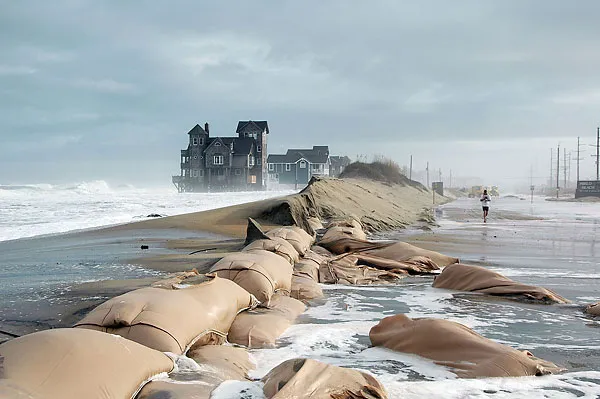
Sea levels are expected to rise between 7 inches to 6.6 feet (18 centimeters to 2 meters) this century, according to a 2007 assessment by the Intergovernmental Panel on Climate Change. The higher tides will bring more coastal flooding and bigger storm surges, the IPCC report warned.
Though the four pollutants are known contributors to climate change, policymakers tend to focus on carbon dioxide, the 800-pound-gorilla of global warming, when it comes to reducing emissions. Frustrated at the slow pace of negotiations on cutting carbon dioxide, the research team decided to investigate other ways to slow the planet's warming, according to a statement from the National Center for Atmospheric Research (NCAR) in Boulder, which participated in the research.
"To avoid potentially dangerous sea level rise, we could cut emissions of short-lived pollutants even if we cannot immediately cut carbon dioxide emissions," NCAR's Aixue Hu, lead study author, said in the statement. "This new research shows that society can significantly reduce the threat to coastal cities if it moves quickly on a handful of pollutants."
The study models relied on emissions cuts beginning in 2015. Hu and his colleagues tested the effects of lowering atmospheric levels of the four gases and particles by 30 to 60 percent over the next several decades, the steepest cuts believed possible by economists, the study said.
Get the world’s most fascinating discoveries delivered straight to your inbox.
Even if these cuts are made, though, carbon dioxide is still the main threat, the authors said.
"It must be remembered that carbon dioxide is still the most important factor in sea level rise over the long term," Warren Washington, a study co-author at NCAR, said in the statement. "But we can make a real difference in the next several decades by reducing other emissions."
Email Becky Oskin or follow her @beckyoskin. Follow us @livescience, Facebook & Google+. Original article on LiveScience.com.
