













Supreme Court Rejects Challenge to Embryonic Stem Cell Research

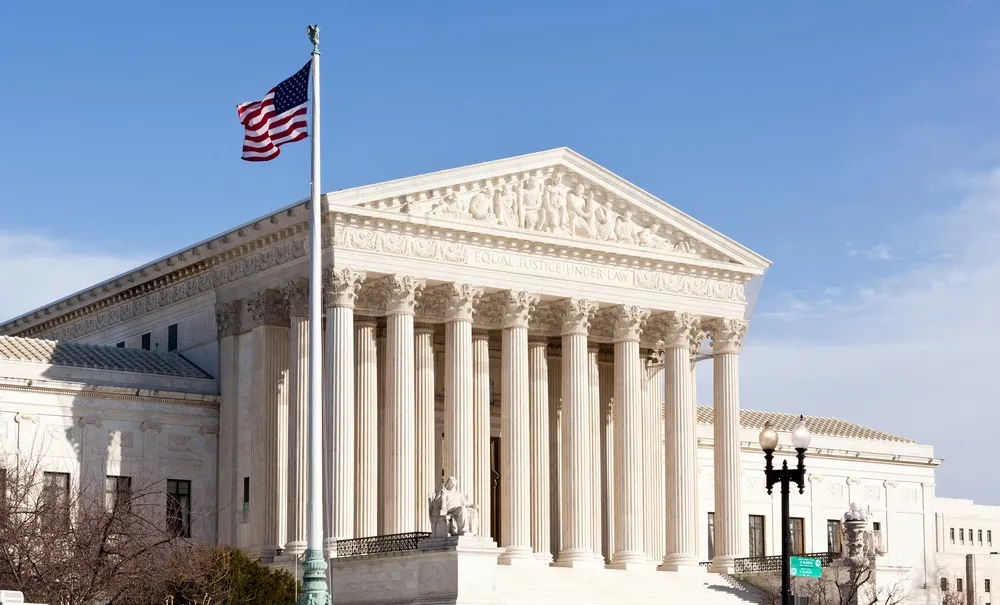
The U.S. Supreme Court announced Monday (Jan. 7) that it won't review a challenge to federal funding for embryonic stem cell research, putting to bed a controversy that once threatened to cut off support for such studies.
"This is good news for patients," the Association of American Medical Colleges said in a statement. "Research using hESCs (human embryonic stem cells) conducted under rigorous ethical standards continues to offer great promise in the search for cures and treatments for a variety of intractable diseases. With the legislative, regulatory and legal barriers cleared, we hope the promise of hESC research can now be realized."
Human embryonic stem cells, which are derived from eggs fertilized in vitro, are able to morph into virtually any cell in the human body. They're prized for such flexibility and are being used in the search for potential treatments and cures for a variety of human diseases, including diabetes, cancer, Parkinson's disease, amyotrophic lateral sclerosis (ALS, or Lou Gehrig's disease) and Alzheimer's disease. But the cells have also sparked controversy, with some arguing that embryos deserve all the protections of human life.
Without comment, the high court rejected the challenge brought by James Sherley and Theresa Deisher, two researchers who work exclusively with adult stem cells. Adult stem cells are derived from adult tissue and have a more limited ability than hESCs to form other types of cells. For example, neural stem cells can only develop into neurons.
Sherley and Deisher argued that hESC research violates federal law banning the creation and destruction of human embryos for scientific purposes. They sued in 2009 to block federal funding to such research made possible shortly after Present Barack Obama took office and signed an executive order reversing the Bush administration ban on federal funding for embryonic stem cell research.
As U.S. law prohibits the creation and destruction of embryos, the initial extraction of the stem cells from the embryos still would depend on private funding under the Obama administration's policy. But as long as the stem cells were obtained from embryos no longer needed for in-vitro fertilization, and the donors gave permission for the embryos to be used for research purposes, federal funds could be used for research on the resulting stem cell lines.
In response to Sherley and Deisher's challenge, a U.S. district court judge issued a preliminary injunction in August 2010 that shut down federally funded human embryonic experiments. That decision was eventually overturned by an appeals court, prompting Sherley and Deisher to ask the Supreme Court to review the case.
Get the world’s most fascinating discoveries delivered straight to your inbox.
Follow LiveScience on Twitter @livescience. We're also on Facebook & Google+.
