 Live Science Plus





You are now subscribed
Your newsletter sign-up was successful
Want to add more newsletters?

Delivered Daily
Daily Newsletter
Sign up for the latest discoveries, groundbreaking research and fascinating breakthroughs that impact you and the wider world direct to your inbox.

Once a week
Life's Little Mysteries
Feed your curiosity with an exclusive mystery every week, solved with science and delivered direct to your inbox before it's seen anywhere else.
Once a week
How It Works
Sign up to our free science & technology newsletter for your weekly fix of fascinating articles, quick quizzes, amazing images, and more

Delivered daily
Space.com Newsletter
Breaking space news, the latest updates on rocket launches, skywatching events and more!

Once a month
Watch This Space
Sign up to our monthly entertainment newsletter to keep up with all our coverage of the latest sci-fi and space movies, tv shows, games and books.

Once a week
Night Sky This Week
Discover this week's must-see night sky events, moon phases, and stunning astrophotos. Sign up for our skywatching newsletter and explore the universe with us!
Join the club
Get full access to premium articles, exclusive features and a growing list of member rewards.
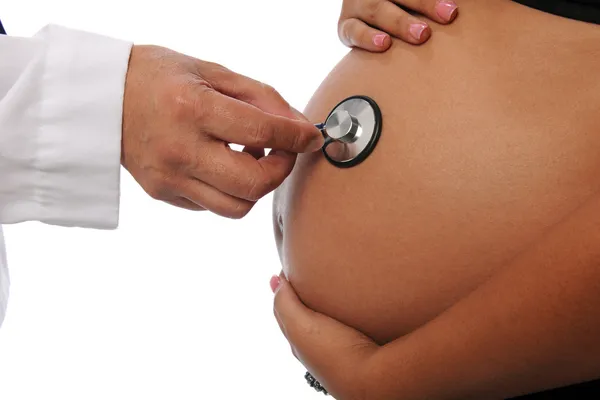
More that one-third of U.S. births between 2006 and 2010 were the result of unintended pregnancies, a new government report says. That means the overall rate of unintended births has not changed much since 1982.
The findings showed that in total, 37.1 percent of pregnancies in 2006 to 2010 were unintended; the rate in 1982 was 36.5 percent. The rate rose to 39.1 in 1988, before falling to 30.6 in 1995.
Reducing the rate of unintended births is important because these births bring social, economic and health consequences for the mother and child, the researchers said. Women who become pregnant unintentionally have higher rates of delaying prenatal care, smoking during pregnancy and not breast-feeding. Studies show these births are also associated with poorer health during childhood, and poorer outcomes for the mother and the mother-child relationship, according to the report.
Among married women, 23.4 percent of births were unintended, the data from 2006-2010 showed. Half of births to unmarried women living with a partner were unintended.
Among women who were unmarried and not living with a partner, 66.9 percent of births were unintended, a rise from the 2002 rate of 59.5. The highest rate of unintended births was seen in young women in this group — 78.9 percent of births to unmarried women ages 15 to 24 were unintended, the report said.
Unintended pregnancies include both pregnancies that are unwanted, and those are mistimed, meaning the woman said she wanted to become pregnant at some point, but not at the time she did.
Women's education levels also made a difference. About 83 percent of births to college-educated women were intended, while 59 percent of births to women with less than a high school diploma were intended.
Researchers asked women who were not using contraception at the time they conceived about their reasons. They found that 35.9 percent said they did not think they could get pregnant. Additionally, 23.1 percent said they would not mind if they became pregnant, 17.3 percent said they had not expected to have sex, 14.3 percent said they were worried about the side effects of using birth control.
Eight percent said their male partner did not want to use birth control himself, and 5.3 percent said their male partner did not want them to use birth control.
The report is based on data gathered during the National Survey of Family Growth, which was conducted by the Centers for Disease Control and Prevention. Researchers conducted in-person, 80-minute interviews with a nationally representative sample of 12,279 women ages 15 to 44, to get information about the factors affecting birth and pregnancy rates. They also analyzed data gathered during previous surveys conducted in 1982, 1988, 1995 and 2002.
The data are based on pregnancies that ended in live births; those that ended in miscarriage, stillbirth or abortion were excluded.
Pass it on: More than a third of all U.S. births were unintended pregnancies.
MyHealthNewsDaily is a sister site to LiveScience. Follow MyHealthNewsDaily on Twitter @MyHealth_MHND. We're also on Facebook & Google+.

