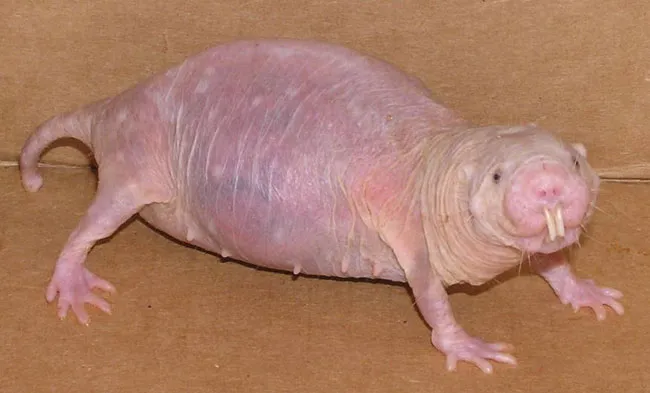
Naked Mole Rat Offers Clue to Long Life

Get the world’s most fascinating discoveries delivered straight to your inbox.
You are now subscribed
Your newsletter sign-up was successful
Want to add more newsletters?
Delivered Daily
Daily Newsletter
Sign up for the latest discoveries, groundbreaking research and fascinating breakthroughs that impact you and the wider world direct to your inbox.
Once a week
Life's Little Mysteries
Feed your curiosity with an exclusive mystery every week, solved with science and delivered direct to your inbox before it's seen anywhere else.
Once a week
How It Works
Sign up to our free science & technology newsletter for your weekly fix of fascinating articles, quick quizzes, amazing images, and more
Delivered daily
Space.com Newsletter
Breaking space news, the latest updates on rocket launches, skywatching events and more!
Once a month
Watch This Space
Sign up to our monthly entertainment newsletter to keep up with all our coverage of the latest sci-fi and space movies, tv shows, games and books.
Once a week
Night Sky This Week
Discover this week's must-see night sky events, moon phases, and stunning astrophotos. Sign up for our skywatching newsletter and explore the universe with us!
Join the club
Get full access to premium articles, exclusive features and a growing list of member rewards.
Naked mole rats live three to ten times longer than common rats, and several studies have shown the subterranean creatures might hold clues to longer life in humans. A new study finds a protein that could offer some longevity clues.
Genetic analysis of naked mole rats finds concentrations the protein NRG-1, crucial to brain functioning, are higher in naked mole rats than in several other rodent species and remain high throughout their lifetimes. NRG-1 is concentrated in the cerebellum, the part of the brain important to motor control, the researchers explained in a statement.

Future research could reveal how NRG-1 helps to maintain neuron integrity and lead to discoveries about human aging as well, say the researchers, Dorothee Huchon of Tel Aviv University, Rochelle Buffenstein of the University of Texas and Yael Edrey of the City College of New York.
The findings, announced today, are detailed in the journal Aging Cell.
Previous research has found that naked mole rats have more productive protein-producing machines than other creatures, and also have more efficient systems to clean up damage proteins.
Get the world’s most fascinating discoveries delivered straight to your inbox.