
















Marsupial gallery: A pouchful of cute

Kanga and Roo
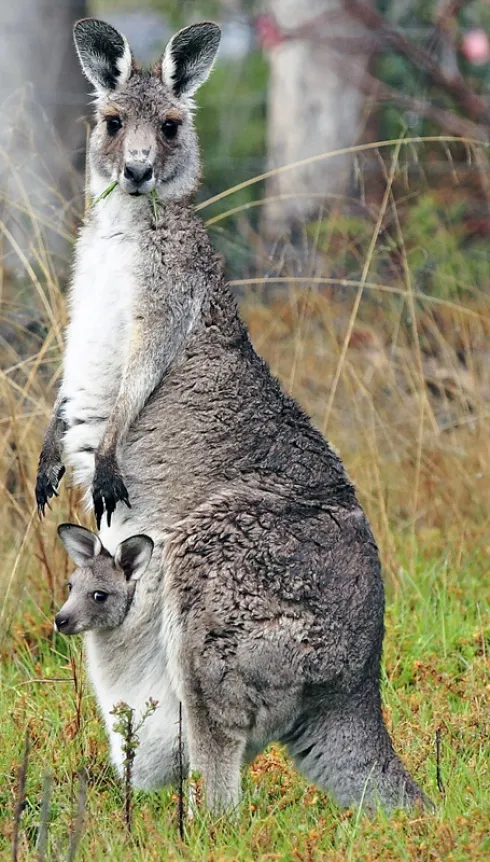
Kangaroos are the most famous of the pouched marsupial mammals. Here, a kangaroo joey peers out from its mother's pouch. Marsupials give birth to underdeveloped young and then nourish them in pouches for up to a year.
Koala Mama

A koala holds her sleeping joey. These adorable herbivores subsist on a diet of eucalyptus, spending hours a day eating. Time not spent snacking is usually passed by snoozing, owing to koalas' very low metabolic rate.
Baby Koala
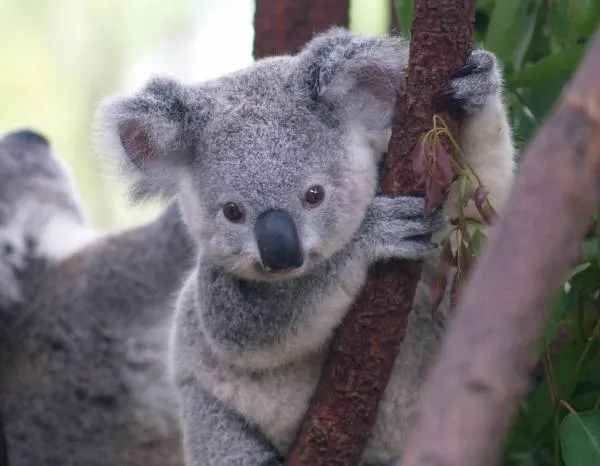
Baby koala at the Currumbin Wildlife Sanctuary.

Tasmanian Tigers
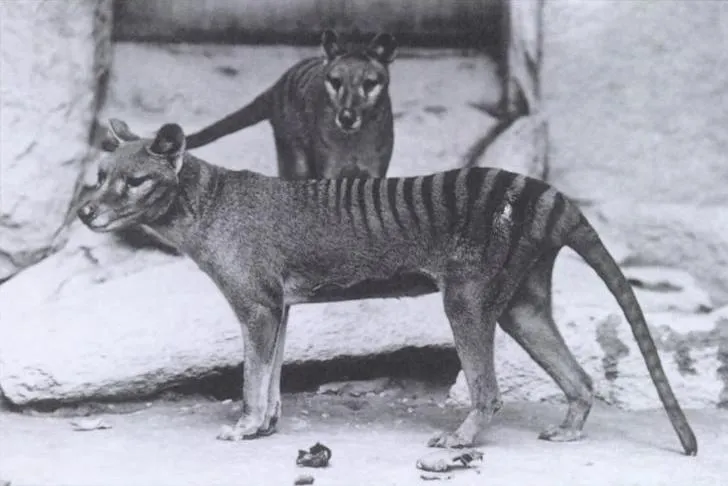
Once the largest carnivorous marsupial in Australia and Tasmania, the Tasmanian tiger went the way of the dodo in 1936. Environmental pressure and hunting killed off Tasmanian tigers, also known as thylacines. The last died in a zoo in 1936, only months after the Tasmanian government extended protection to the species.
Tasmanian Devil At Rest

The Tasmanian Devil is the closest relative to the now-extinct Tasmanian tiger. Devils are dog-sized predators known for their pungent odor.
Tasmanian Teeth

Watch out for the teeth! Tasmanian devils have strong jaws and necks, making them one of the best biters in the animal kingdom.
Jumping for Joy
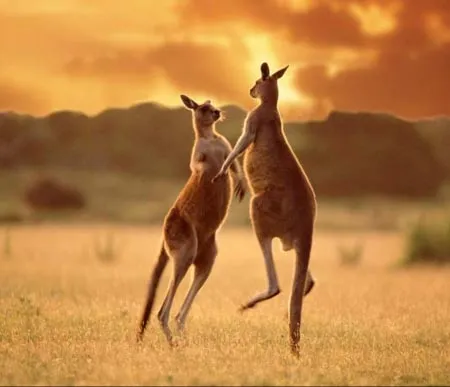
A pair of kangaroos cavort.
Get the world’s most fascinating discoveries delivered straight to your inbox.
Lights, Camera, Possum

A pet ring tailed possum examines department of information movie camera somewhere in north Australia and assumes the operators' stance in this 1943 photo.
Gi & Joey

Speaking of World War II and marsupials, here's a 1942 photograph of an American GI with his pet kangaroo on an allied air base.
Endangered Bilby

The Bilby, a rabbit-sized marsupial, is endangered. To raise awareness and support for conservation, some Australians have recreated the Easter Bunny myth, claiming that in Australia, rabbits don't deliver candy — bilbies do!
Wallaby

Wallabies are smaller than their kangaroo cousins.

Stephanie Pappas is a contributing writer for Live Science, covering topics ranging from geoscience to archaeology to the human brain and behavior. She was previously a senior writer for Live Science but is now a freelancer based in Denver, Colorado, and regularly contributes to Scientific American and The Monitor, the monthly magazine of the American Psychological Association. Stephanie received a bachelor's degree in psychology from the University of South Carolina and a graduate certificate in science communication from the University of California, Santa Cruz.