Live Science Plus


You are now subscribed
Your newsletter sign-up was successful
Want to add more newsletters?

Delivered Daily
Daily Newsletter
Sign up for the latest discoveries, groundbreaking research and fascinating breakthroughs that impact you and the wider world direct to your inbox.

Once a week
Life's Little Mysteries
Feed your curiosity with an exclusive mystery every week, solved with science and delivered direct to your inbox before it's seen anywhere else.

Once a week
How It Works
Sign up to our free science & technology newsletter for your weekly fix of fascinating articles, quick quizzes, amazing images, and more

Delivered daily
Space.com Newsletter
Breaking space news, the latest updates on rocket launches, skywatching events and more!

Once a month
Watch This Space
Sign up to our monthly entertainment newsletter to keep up with all our coverage of the latest sci-fi and space movies, tv shows, games and books.

Once a week
Night Sky This Week
Discover this week's must-see night sky events, moon phases, and stunning astrophotos. Sign up for our skywatching newsletter and explore the universe with us!
Join the club
Get full access to premium articles, exclusive features and a growing list of member rewards.
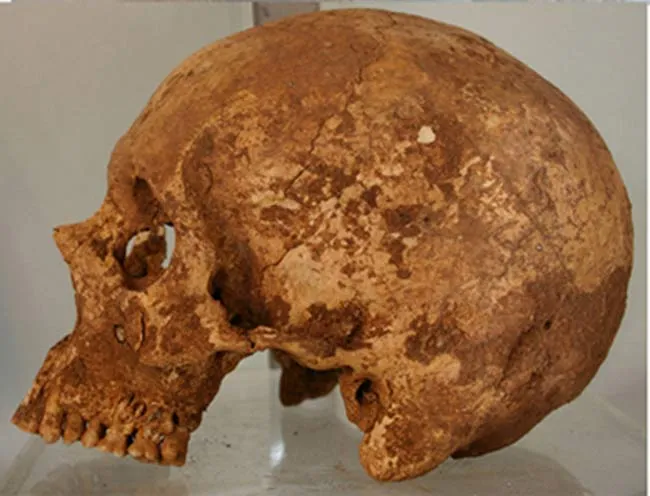
A recently unearthed human skull [image] believed to have been used as a ceremonial trophy by the people of an ancient Peruvian empire gives new insights into the nature of warfare in the society, archaeologists say.
The Wari Empire, a society that predated the Incas, ruled over parts of Peru 1,500 to 1,000 years ago.
While exploring a Wari cemetery last summer in Peru’s Huaro Valley, archaeologists discovered what they consider to be an elite section of the graveyard when they came across llama bones arranged in a special pattern, often a marker of something special when it comes to Wari remains.
Beneath the bones, the team found a skull with several unusual holes and marks that seem to indicate it was revered. Circular holes cut at the skull’s base [image] and back suggest it was held on poles or worn as a large pendant during special ceremonies.
A line cut across the front of the skull indicated that the scalp may have been removed either for cleaning or as a ceremonial vessel, and was later reattached with gold-alloy pins.
The archaeologists think the skull belonged to a warrior because of healed-over scars and abrasions on it. They estimate the warrior was about 30 years old when he died.
For his skull to be displayed in ceremonies, the man must have been a well-respected warrior.
“The trophy skull adds a new dimension to our understanding of the role of warriors and warfare in Wari culture,” said team leader Mary Glowacki of the Earthwatch Institute. The expedition was funded by volunteers who join Earthwatch scientists on field missions.
The site of the cemetery, Cotocotuyoc, which sits high above the floor of the valley, was believed to be a last stronghold of the Wari as their empire collapsed.
- Top 10 Ancient Capitals
- Elite Women Made Beer in Pre-Incan Culture
- Tattooed Mummy With Jewelry Found in Peru
- Peace or War? How Early Humans Behaved
- Top 10 Unexplained Phenomena