 Live Science Plus





You are now subscribed
Your newsletter sign-up was successful
Want to add more newsletters?

Delivered Daily
Daily Newsletter
Sign up for the latest discoveries, groundbreaking research and fascinating breakthroughs that impact you and the wider world direct to your inbox.

Once a week
Life's Little Mysteries
Feed your curiosity with an exclusive mystery every week, solved with science and delivered direct to your inbox before it's seen anywhere else.

Once a week
How It Works
Sign up to our free science & technology newsletter for your weekly fix of fascinating articles, quick quizzes, amazing images, and more

Delivered daily
Space.com Newsletter
Breaking space news, the latest updates on rocket launches, skywatching events and more!

Once a month
Watch This Space
Sign up to our monthly entertainment newsletter to keep up with all our coverage of the latest sci-fi and space movies, tv shows, games and books.

Once a week
Night Sky This Week
Discover this week's must-see night sky events, moon phases, and stunning astrophotos. Sign up for our skywatching newsletter and explore the universe with us!
Join the club
Get full access to premium articles, exclusive features and a growing list of member rewards.
More than 20 marsupials, some still suckling newborns, plunged to their deaths 15 million years ago through a vertical cave entrance obscured by vegetation, new fossil evidence suggests.
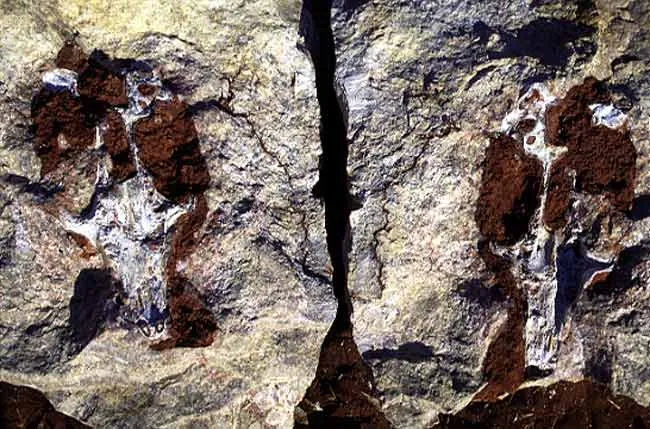
Researchers discovered the remains along a cave floor [image] in Australia, revealing nearly the complete life cycle of this extinct wombat-like marsupial.
Revealing skulls
By comparing the skulls of 26 different Nimbadon individuals that died in the cave at varying stages of life, the researchers found the wild baby animals developed in much the same way as marsupials today, probably being born after only a month's gestation and crawling to the mother's pouch to complete their early development.
The skulls also suggested early in life, there was an emphasis on the development of bones at the front of the face, to help the baby suckle from its mother. As the marsupial grew older and it started eating leaves, the rest of the skull developed and mushroomed in size as a result of a series of bony chambers around the brain.
Even so, the team found its brain was pretty small and stopped growing relatively early in life.
"We think it needed a large surface area of skull to provide attachments for all the muscle power it required to chew large quantities of leaves, so its skull features empty areas, or sinus cavities," said study team member Mike Archer of the University of New South Wales (UNSW) in Sydney. "Roughly translated, this may be the first demonstration of how a growing mammal 'pays' for the need to eat more greens — by becoming an 'airhead.'"
Mob behavior?
"The abundance of Nimbadon fossils also suggests that they travelled in family groups or perhaps even larger gatherings," Archer said today. "It's possible that this also reflects the beginning of mob behavior in herbivorous marsupials, such as we see today in grey kangaroos."
The team, led by Karen Black of the University of New South Wales (UNSW) in Sydney, has literally just "scratched the surface" of the cave, "with thousands more bones evident at deeper levels in the deposit," Archer said.
Details of the find at the site known as AL90 in the Riversleigh World Heritage fossil field in Queensland are published in the Journal of Vertebrate Paleontology.
The research was supported by the Xstrata Community Partnership Program North Queensland and the Australian Research Council.
