













Trilobites had a hidden third eye, new fossils reveal
What had multiple eyes and a hard shell? A trilobite, that's what.
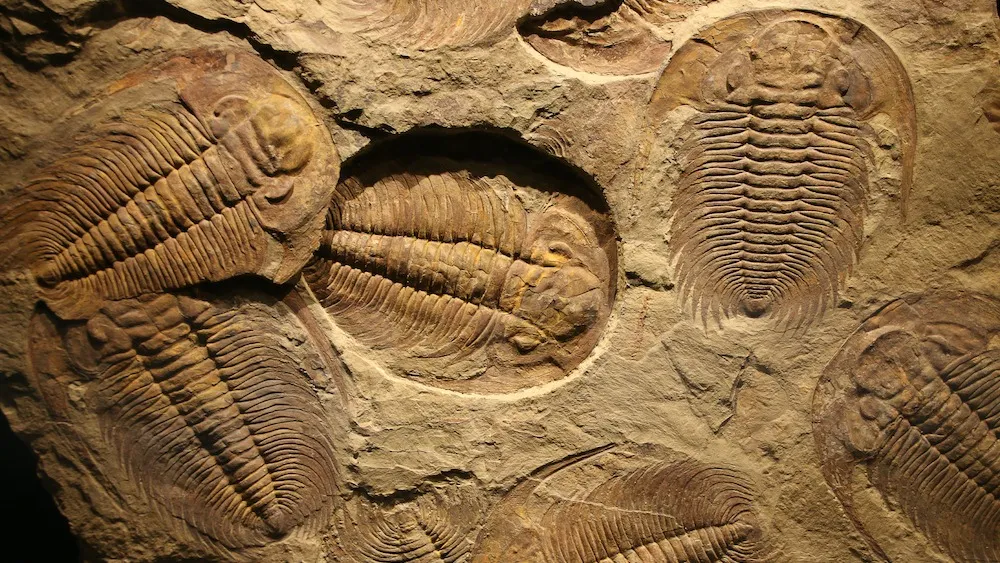
Trilobites, a group of extinct marine arthropods, had a hidden third eye — and sometimes even a fourth or fifth, new research suggests.
Paleontologists knew that, like other arthropods such as insects and spiders, these hard-shelled prehistoric sea creatures had a pair of compound eyes, which they used to see during the Paleozoic Era (541 million to 252 million years ago).
But scientists recently discovered a median eye located in the middle of the long-dead creatures’ foreheads — a common characteristic in arthropods today, according to a study published March 8 in the journal Scientific Reports.
Before this, scientists thought that the third eyes "were a characteristic of the larval stage of the animals" that was indicative of this time of life. These eyes were "located under a transparent layer of the carapace [shell], which became opaque during the fossilization process," meaning the third eye was essentially hidden within ancient fossils, researchers said in a statement.
When the researchers examined a specimen of Aulacopleura koninckii that had part of its head missing, they found three "dark, inconspicuous and tiny oval spots of the same size at the front of the head," according to the statement.
Related: World's oldest known case of cannibalism revealed in trilobite fossils
"This clear, regular appearance distinguishes this structure from random formations produced by decay or fossilization and corresponds to the expected relics of simple median eyes equipped with a pigment layer," lead author Brigitte Schoenemann, a substitute professor at the Institute of Zoology at the University of Cologne in Germany, said in the statement. "Even if it is a single find, it supports the assumption that trilobites originally had median eyes."
Get the world’s most fascinating discoveries delivered straight to your inbox.
RELATED STORIES
At different points in evolution, trilobites likely had anywhere from one to multiple median eyes. For example, the researchers found that the trilobite Cyclopyge sibilla had three median eyes equipped with lenses similar to those in human eyes, and Cindarella eucalla had four. Nowadays, most modern insects and crustaceans have three median eyes, according to the statement.
"We now have an important tool to determine [trilobites'] position in the evolutionary tree," the study authors wrote in the statement.
Jennifer Nalewicki is former Live Science staff writer and Salt Lake City-based journalist whose work has been featured in The New York Times, Smithsonian Magazine, Scientific American, Popular Mechanics and more. She covers several science topics from planet Earth to paleontology and archaeology to health and culture. Prior to freelancing, Jennifer held an Editor role at Time Inc. Jennifer has a bachelor's degree in Journalism from The University of Texas at Austin.