













Catch the full moon (and a penumbral eclipse) on Monday
The full moon appears early Monday morning, Nov. 30.


Skywatchers admiring November's full moon will also get to see another treat: a penumbral eclipse, when the moon passes through Earth's outer shadow, on Monday, Nov. 30, according to NASA.
The moon will be at its fullest for only a moment — on Monday, that happens at 4:30 a.m. EST (9:30 UTC) — but the moon will appear full for three days: from Saturday night through Tuesday morning (Nov. 28 to Dec. 1).
Meanwhile, sky gazers need to remember three times to catch the penumbral eclipse: It starts before the full moon at 2:32 a.m. EST (7:32 UTC); reaches its maximum at 4:42 a.m. EST (9:42 UTC), when 83% of the moon will be covered with Earth's faint shadow; and ends at 6:53 a.m. EST (11:53 UTC) Monday morning, according to timeanddate.com.
Related: In photos: Glitzy images of a supermoon
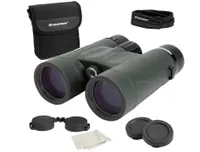
Celestron Nature DX 8x42 Binocular: $146.95 $79.00 at Amazon
Get an impressive 46% off the Celestron Nature DX 8x42 Binocular at Amazon. These binoculars are great for terrestrial views but are also excellent for scanning craters of the moon and catching the International Space Station.
Penumbral eclipses are different from total or partial eclipses. During a total lunar eclipse, Earth passes directly between the sun and moon, blocking the sun's light from reaching our natural satellite. In contrast, during a partial eclipse, the moon passes through part of Earth's inner dark shadow, known as the umbra. Finally, in a penumbral eclipse, the moon passes through part of Earth's outer, fainter penumbral shadow, according to Space.com, a Live Science sister site.
Unless you're a seasoned skywatcher, it may be challenging to see November's penumbral eclipse, which will be visible in North America (as long as there aren't cloudy skies), because the penumbral shadow will appear as a dim veil. "The dimming of the moon during this eclipse will probably not be noticeable without instrumentation, but for spacecraft at the moon such as the Lunar Reconnaissance Orbiter (LRO), the reduction in solar power will be noticeable," NASA wrote in a statement.
November's full moon, known to many as the beaver moon, comes late in the month this year because October had two full moons; the second moon, a blue moon, was the first time in 76 years that a full moon was visible across the U.S. on Halloween. Other names for November's full moon include the cold moon, frost moon, winter moon, oak moon, moon before Yule and child moon. The full moon will also be celebrated during Kartik Purnima (a Hindu, Sikh and Jain cultural festival, celebrated differently by each culture), Karthika Deepam (a festival of lights observed by some Hindus), Tazaungdaing Festival Moon (observed by Bhudists in Myanmar, formerly Burma), and Ill Poya (celebrated in Sri Lanka), NASA reported.
Get the world’s most fascinating discoveries delivered straight to your inbox.

A nearly-full moon rises over the Wasatch Mountains near Salt Lake City on April 17, 2019.
The beaver moon is the last full moon before the winter solstice, the shortest day of sunlight in the Northern Hemisphere, which falls on Dec. 21 this year. Other celestial sightings to look for in late November and early December include "Jupiter and Saturn, [which] will appear to gradually shift closer to each other, appearing nearer than the apparent diameter of the Moon from Dec. 17 to 25," NASA reported. "They will appear at their closest, about one-fifth the diameter of the Moon, on Dec. 21, 2020."
RELATED CONTENT
People with backyard telescopes should be able to see Jupiter's four bright moons: Ganymede, Callisto, Europa, and Io, and even Saturn's brightly illuminated rings and Titan, its largest moon. "Seeing Jupiter and Saturn so near each other should appear spectacular by telescope and with the naked eye," NASA said.
To those who miss November's moon, they can always plan to see the last full moon of 2020, which will light up the night sky at 10:28 p.m. EST on Dec. 29 (3:28 UTC on Dec. 30).
Originally published on Live Science.

Laura is the managing editor at Live Science. She also runs the archaeology section and the Life's Little Mysteries series. Her work has appeared in The New York Times, Scholastic, Popular Science and Spectrum, a site on autism research. She has won multiple awards from the Society of Professional Journalists and the Washington Newspaper Publishers Association for her reporting at a weekly newspaper near Seattle. Laura holds a bachelor's degree in English literature and psychology from Washington University in St. Louis and a master's degree in science writing from NYU.