













Gut bacteria may 'talk' to the brain, mouse study suggests

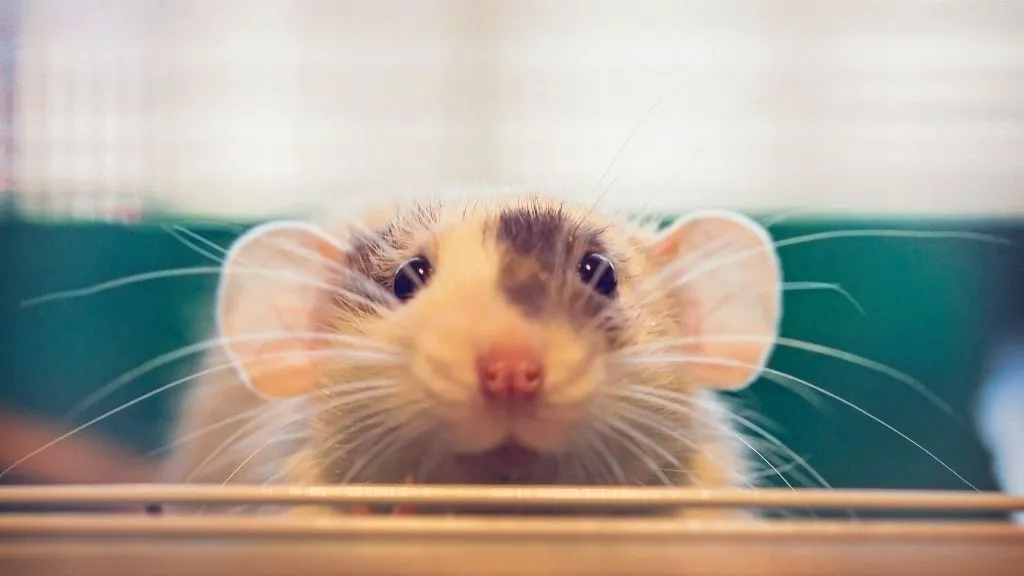
Mice carry a teeming community of bacteria in their guts, and these gut bugs influence how the rodents' brains work, according to a new study.
Specifically, researchers wanted to find out how gut bacteria influence the activity of brain networks involved in mouse social behavior. Normally, when a mouse encounters a mouse it's never met, the two rodents will sniff at each other's whiskers and clamber over each other, much like how two dogs might greet each other at a dog park. However, germ-free mice, which lack gut bacteria, actively avoid social interactions with other mice and instead remain strangely aloof.
"The social impairment in germ-free mice, that's not new," said first author Wei-Li Wu, an assistant professor at the National Cheng Kung University in Taiwan and a visiting associate at the California Institute of Technology. But Wu and his team wanted to understand what drives this standoffish behavior — do gut bugs actually influence which neurons fire in the mouse brain, and thus affect a rodent's willingness to mingle?
Related: 5 ways gut bacteria affect your health
Stranger danger
The first time Wu heard that bacteria could influence the behavior of animals, he thought, "That sounds amazing but a little bit unbelievable," he told Live Science. But as a postdoctoral scholar at Caltech, he began running experiments with germ-free mice and witnessed their odd social behavior firsthand. While these strange behaviors had been described in various studies, Wu wanted to understand why they emerged.
In their new study, published Wednesday (June 30) in the journal Nature, the researchers compared the brain activity and behavior of normal mice with that of two other groups: mice raised in a sterile environment to be germ-free and mice treated with a powerful cocktail of antibiotics that depleted their gut bacteria. (As soon as the germ-free mice entered an unsterile environment, they would start picking up bacteria, so the researchers could use this batch only once; the antibiotic-treated mice were more versatile and could be used for multiple experiments.)
The team placed their germ-free and antibiotic-treated mice in cages with unknown mice, to observe their social interactions. As expected, both groups of mice avoided interactions with strangers. Following this behavioral test, the team ran a multitude of experiments to see what was happening in the animals' brains that may have driven this odd social dynamic.
Get the world’s most fascinating discoveries delivered straight to your inbox.
First, the team examined the animals' brains for c-Fos, a gene that switches on in active brain cells. Compared with the normal mice, the mice with depleted bacteria showed heightened c-Fos activation in brain regions involved in stress responses, including the hypothalamus, amygdala and hippocampus.
This spike in brain activity coincided with a spike in a stress hormone called corticosterone in the germ-free and antibiotic-treated mice, while the same increase did not occur in mice with normal microbiomes, or communities of microbes. "After social interaction — it's just a five-minute interaction — I can clearly see that ... they all have higher stress hormones," Wu said.
Corticosterone primarily gets produced by the body's central stress response system, known as the hypothalamic-pituitary-adrenal (HPA) axis; the HPA axis links two brain structures (the hypothalamus and the pituitary gland) to the adrenal glands located on the kidneys. After seeing a spike in corticosterone in the germ-free mice, the team wondered if messing with the HPA axis could bring those levels back down and "correct" the rodents' behavior.
The team first looked at the adrenal gland, the last component of the HPA axis. They found that removing the adrenal gland appeared to boost the mice's social behavior; upon encountering a stranger, the mice without gut bugs behaved similarly to those with normal microbiomes. Blocking the production of corticosterone with drugs also increased the rodents' sociability, as did blocking or deleting the receptors that bind corticosterone in the brain, known as glucocorticoid receptors. Without receptors to bind the stress hormone, the mice didn't respond to spikes in corticosterone.
Related: From dino brains to thought control — 10 fascinating brain findings
The team then did more experiments targeting the hypothalamus, the first component in the HPA axis. They zoomed in on a specific population of brain cells that produce corticotropin-releasing factor (CRF), a peptide that triggers a chain reaction of activity along the HPA axis and is key for corticosterone production. They inserted specifically designed receptors onto CRF neurons in the hypothalamus, which allowed the team to switch those neurons on and off at whim using a specific drug. Switching off the neurons in antibiotic-treated mice boosted their sociability toward strangers; conversely, switching on the cells in normal mice caused them to suddenly avoid social interactions.
This finding hinted that these hypothalamus cells might be overactive in germ-free mice and that somehow, gut bugs help tune them down in normal mice. This would, in turn, modulate the activity of the HPA axis and the production of stress hormones.
RELATED CONTENT
Backing up this theory, the team found that introducing the bacterium Enterococcus faecalis into the germ-free and antibiotic-treated mice also promoted social activity and reduced corticosterone levels in the animals. "When they put it back in, it seemed that the social behavior was 'rescued,' so to speak," said Diego Bohórquez, an associate professor and neuroscientist at Duke University School of Medicine who studies the gut-brain connection and was not involved in the study.
But while the team specifically highlighted E. faecalis, in reality, Bohórquez said he suspects an array of microbes work together to modulate stress hormone production.
Collectively, these experiments made a strong case that, in normal mice, gut bugs somehow modulate the production of corticosterone and help the animals engage in social behaviors, while germ-free mice deal with an overabundance of the stress hormone and thus balk at opportunities for social interaction, Bohórquez said. But how that works at the level of the gut remains unclear, he added.
"It was a logical step to go look into the brain, but there's a big gap in terms of what's happening between the gut and the brain," he said. For instance, the gut produces its own endocannabinoids, a class of chemical messenger also found in the brain, and these chemicals engage with the HPA axis, he noted. Receptors for CRF can also be found in the gut. Now, the big question is how the gut microbiome might use these networks to "talk" to the brain, and thus help control behavior from the depths of the intestines, Bohórquez said.
"We still want to tackle, what, exactly, does this bacteria do to the body?" Wu said, echoing the sentiment. "I think that's the clear pathway where we want to do further digging."
Beyond mouse experiments, this line of research could someday help scientists treat individuals with neuropsychiatric disorders, such as anxiety and autism spectrum disorder, assuming some of the observations in animals carry over to people, Bohórquez said. Research suggests that anxiety and autism often coincide with gastrointestinal disorders, such as constipation and diarrhea, as well as with disruptions of the gut microbiome, scientists have reported in the journals General Psychiatry and JAMA. For the past decade, scientists have been investigating this gut-brain link in hopes of developing new treatment approaches for such disorders, Bohórquez said.
"This specific work, I don't know if it moves the needle forward" in terms of crafting microbiome-based treatments for autism, he added. But in general, "they are bringing more granularity in terms of how these microbes affect social behavior," he said.
Originally published on Live Science.

Nicoletta Lanese is the health channel editor at Live Science and was previously a news editor and staff writer at the site. She is a recipient of the 2026 AHCJ International Health Study Fellowship, with a project focused on antibiotic stewardship practices in Japan and the U.S. They hold a graduate certificate in science communication from UC Santa Cruz and degrees in neuroscience and dance from the University of Florida. Beyond Live Science, Lanese's work has appeared in The Scientist, Science News, the Mercury News, Mongabay and Stanford Medicine Magazine, among other outlets. Based in NYC, she also remains involved in dance and performs in local choreographers' work.