














Venomous spiders take advantage of pandemic, move into college buildings
The Mediterranean recluse spider recently showed up in buildings at the University of Michigan's Ann Arbor campus, likely because of pandemic-related vacancies.

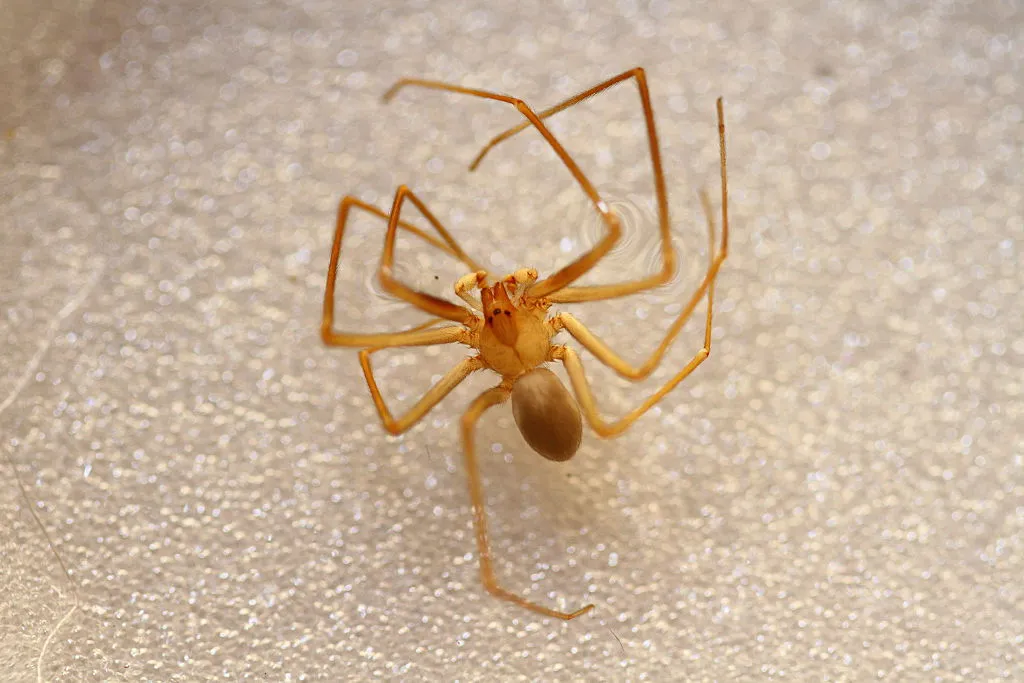
A venomous spider that usually stays away from populated areas recently showed up in buildings at the University of Michigan's Ann Arbor campus, likely because of pandemic-related vacancies, according to news reports.
The species, known as the Mediterranean recluse spider (Loxosceles rufescens), has turned up in "basements and remote areas of several Ann Arbor campus buildings due to a decrease in building occupancy," the university said in a statement Feb. 23. Most recently, several of the spiders were found in the university's Shapiro Library, prompting staff to close the library for two days.
The Mediterranean recluse spider is related to the venomous brown recluse spider (Loxosceles reclusa), but it's even more reclusive.
"As the name implies, they are reclusive, and bites are extremely rare," Anne Danielson-Francois, an associate professor of biology at the University of Michigan, said in the statement. "Users browsing the library stacks would be very unlikely to encounter a stray spider or be bitten."
Related content
The university now says the library closure was not warranted, since the spiders pose such a low risk to humans.
"A misunderstanding of the situation led the library to close for two days," Kim Broekhuizen, a spokesperson for the university, said in the statement. "Based on what we all know now, library managers agree that it was a mistake to close the building, and they apologize for the inconvenience to the university community."
In the rare instances this species does bite a person, those bites could cause necrosis (tissue death), according to The New York Times.
Get the world’s most fascinating discoveries delivered straight to your inbox.
The university has been conducting weekly inspections for the spiders, which were first found there in January, and treating areas with pesticides, where the spiders are identified.
The news is yet another example of animals turning up in unusual places as people stay at home during the coronavirus pandemic. During last year's lockdowns, there were a number of odd animal sightings, including coyotes on the streets of San Francisco and deer on the streets in Japan, the Times reported.
Originally published on Live Science.

Rachael is a Live Science contributor, and was a former channel editor and senior writer for Live Science between 2010 and 2022. She has a master's degree in journalism from New York University's Science, Health and Environmental Reporting Program. She also holds a B.S. in molecular biology and an M.S. in biology from the University of California, San Diego. Her work has appeared in Scienceline, The Washington Post and Scientific American.