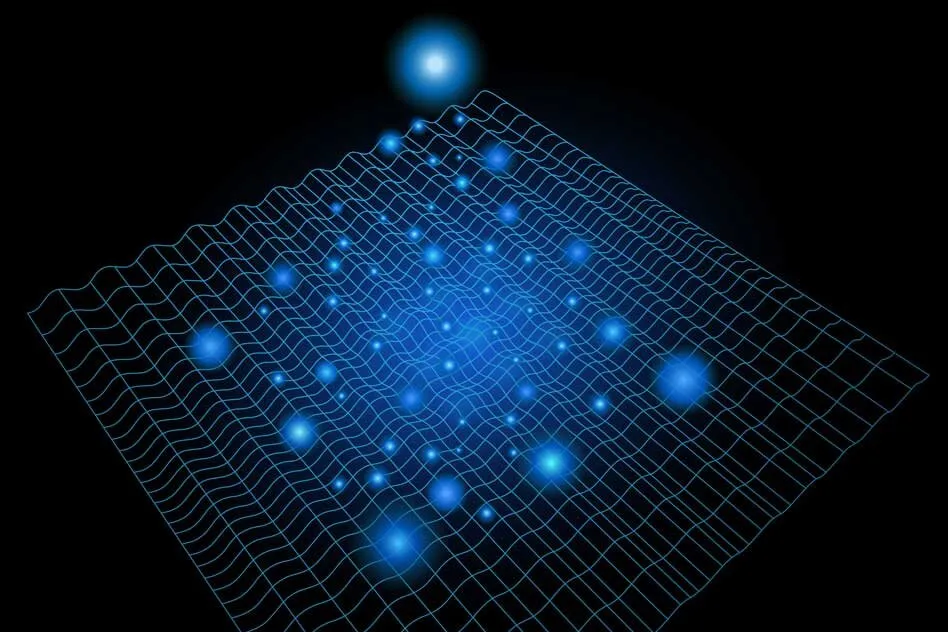
A new phase of matter has been discovered hiding inside a crystal, after physicists blasted the crystal with ultrashort pulses of laser light.
The fleeting new phase of matter appeared in a crystalline material called lanthanum tritelluride — composed of one lanthanum atom and three tellurium atoms. The super short laser pulses changed how electrons moved through the crystal, and the change is enough to classify it as an all-new state of matter.
Bursts of energy usually make substances less orderly, like heat melting ice or a sharp crack shattering glass, the physicists said. But in this case, the laser flash seems to move the crystal into a rare, higher-order state.
"Normally, to change the phase of a material you try chemical changes, or pressure, or magnetic fields. In this work, we are using light to make these changes," Massachusetts Institute of Technology (MIT) physicist Nuh Gedik, one of the leaders of the experiment, said in a statement,.
Lanthanum tritelluride crystals naturally form a layered structure, the physicists said. And within that layered structure you'll find an unusual pattern.
In most substances, the electrons are pretty evenly distributed. But at very low temperatures, lanthanum tritelluride forms pockets of low electron density and pockets of high electron density. And those pockets are organized in a flat pattern that points in the same direction as the crystalline layers. Physicists call this pattern a charge density wave.
Sign up for the Live Science daily newsletter now
Get the world’s most fascinating discoveries delivered straight to your inbox.
But hit the crystal with a flash of laser light less than a trillionth of a second long, and the charge density wave will sharply (and very briefly) switch directions — flowing perpendicular to the direction in which it originally flowed. That's the new phase of matter the physicists found.
In theory, the new phase of matter that appears after the laser flash exists as a sort of latent possibility in the crystal all the time. The laser light suppresses the dominant phase — that original flow of electrical charge — and allows the hidden phase to emerge.
When the effect of the laser subsides, the original phase re-asserts itself. The researchers called the two phases "competing states" in the crystal.
And there are probably other competing states out there, hiding in other crystalline substances, the researchers said in a paper published Nov. 11 in the journal Nature Physics. And they can also likely be discovered with flashes of laser light. Given time, the researchers said, they might uncover new ways to manipulate materials with nothing but flashing lights.
Rafi joined Live Science in 2017. He has a bachelor's degree in journalism from Northwestern University’s Medill School of journalism. You can find his past science reporting at Inverse, Business Insider and Popular Science, and his past photojournalism on the Flash90 wire service and in the pages of The Courier Post of southern New Jersey.