














Hoover Dam reservoir reaches record-low water levels
The Western U.S. continues to suffer from a severe drought.

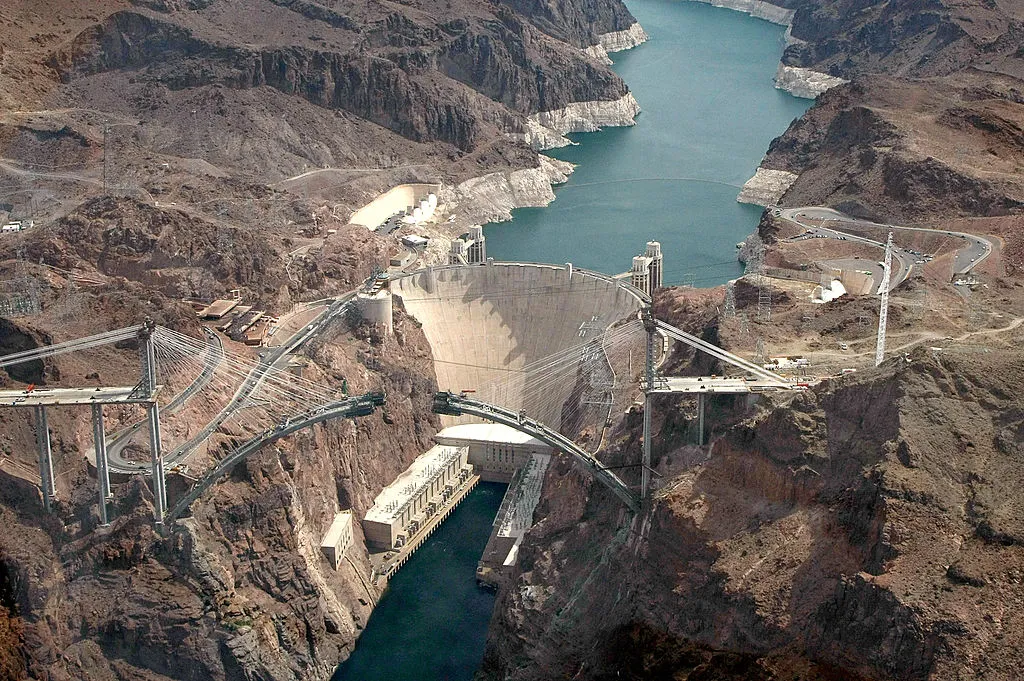
Water levels in Lake Mead, the vital reservoir formed by the Hoover Dam, reached a new record low this week as the Western U.S. continues to suffer from a severe drought, according to news reports.
On Wednesday (June 9), the reservoir's levels dropped to 1,071.56 feet (326 meters) above sea level — slightly lower than the previous record low of 1,074.6 feet (327 meters) set in 2016, according to Reuters. Overall, the reservoir has fallen 140 feet (43 m) in the past 21 years, Reuters reported.
Engineers created Lake Mead in the 1930s by building the Hoover Dam in the Colorado River at the Arizona-Nevada border. It is the largest reservoir in the United States, containing some 9 trillion gallons (34 trillion liters) of water, which gets allocated to about 25 million people living in the Southwest, including those in Los Angeles, San Diego, Phoenix, Tucson and Las Vegas, Reuters reported.
The Southwestern U.S. has been in a nearly continuous drought for the past two decades, with rainfall and snowfall too low to allow the region to fully recover from the drought, according to CNN.
Related: Why the Southwest keeps seeing droughts
"Climate change is clearly playing a role," in the prolonged drought, Brandon Miller, a meteorologist for CNN, told the news outlet. "The warmer temperatures are driving that vicious cycle [of drought] and making it harder for normal or even above-average rainfall years to make a dent," Miller said. "When one or two below-average rainfall/snowfall years occur, as we have just seen, the results are disastrous."
RELATED CONTENT
The low levels in Lake Mead will likely require states that depend on the reservoir to implement water-saving measures. In August, U.S. officials will determine whether to declare a "Level 1 Shortage Condition" for Lake Mead for 2022, which would trigger cuts in water supply for the region, CNN reported.
Get the world’s most fascinating discoveries delivered straight to your inbox.
For example, Arizona may have its water supply cut by 320,000 acre-feet, which would be about a year's supply for 1 million people, according to Retuers.
"While we may have less water coming to Arizona from the Colorado River in 2022, Arizona's water managers and suppliers have been taking measures to prepare and will continue to work to ensure the river remains stable for generations to come," Tom Buschatzke, director of the Arizona Department of Water Resources, told CNN.
Originally published on Live Science.

Rachael is a Live Science contributor, and was a former channel editor and senior writer for Live Science between 2010 and 2022. She has a master's degree in journalism from New York University's Science, Health and Environmental Reporting Program. She also holds a B.S. in molecular biology and an M.S. in biology from the University of California, San Diego. Her work has appeared in Scienceline, The Washington Post and Scientific American.