













'Enhancing' future generations with CRISPR is a road to a 'new eugenics,' says ethicist Rosemarie Garland-Thomson
"Eugenics seeks to improve by eliminating the characteristics considered at a particular time and place to be disadvantages and to maximize those considered normal."


The gene-editing tool CRISPR enabled a groundbreaking new treatment for sickle-cell disease, and in the future, scientists anticipate that it could be used to tackle cancer, forms of inherited blindness, various superbug infections and even HIV. These uses of CRISPR are fairly uncontroversial — but in the background, ethicists worry that the tool could be used to edit away other, nonpathological features of humankind that are deemed "abnormal" or "unacceptable."
In the book excerpt below, Rosemarie Garland-Thomson, a bioethicist, author and thought leader in disability justice, discusses the danger of using CRISPR to enact what she calls "velvet eugenics." The passage is part of an essay featured in the new book "The Promise and Peril of CRISPR" (2024, Johns Hopkins University Press), edited by Dr. Neal Baer.
Related: 'Who are we to say they shouldn't exist?': Dr. Neal Baer on the threat of CRISPR-driven eugenics
A New Eugenics
What does this meditation on eugenic science and its medical practice have to do with CRISPR, the newest and most promising tool in the suite of medical technology with which our fast-paced system of research, development, and commerce has presented us? Much of the public and professional conversation about CRISPR centers on explaining how it works, debating its safety, assessing its potential benefits, considering its targets, or warning against its unintended consequences. My concern is not with the efficacy or ingenuity of the technology, but rather with epistemological questions about what the existence of CRISPR technology suggests about the limits of being human — and what it means for my friend who someday might alter an embryo to align with what is considered a healthy child.
I have invoked the history of eugenics in modernity to support the position in the public and academic debates that much current reproductive technology, including gene editing, carries out a new eugenics in the name of health and reproductive liberty. The other side of the debate supports the free development and use of these reproductive technologies, often amplified by commercial interests. An ethics grounded in liberty interests strongly supports the growth of this laissez-faire medicine in today's moment when public sector or common good enterprises and private commercial interests are increasingly entangled. The commercial logic of free choice enters the obstetrical medical environment not only in support of reproductive liberty, but also in the name of a parental and medical obligation to fulfill the best interests of future children. For instance, a fetus, diagnosed by reproductive technology with spina bifida, can potentially receive in utero surgical treatment or be aborted, depending on the mother's exercise of her medical autonomy, within the limits of state law and local medical protocol. The burden of such a choice falls heavily on the mother trying to weigh the harms and benefits regarding the parental obligation to give one's child a good life. Many of these stories enter public conversation as books and articles about the complex network of suffering and joy as well as trouble and reward when a child with an unexpected medical condition or disability enters a family. The opportunity to operate on the fetus is a choice a mother can make, but her choice is influenced by the opposing societal views of the fetus's future health versus the mother's reproductive freedom.

Rosemarie Garland-Thomson.
The ethical issues today's new eugenics bring forward concern the dynamics among correction, repair, improvement, and elimination as approaches to the development and use of medical technologies such as CRISPR. If the broadest ethical goal of any medical technology is to improve human lives, we must untangle some of the aspirations of eugenics from the enterprise of genetic technology and other medical interventions aimed at bringing all humans to a standard, "normal" form and function. Characteristics that depart from that standard in ways we understand as disadvantageous are human variations we think of as disease. Characteristics we understand as advantages that depart from that standard are often sought after as enhancements. Eugenics seeks to improve by eliminating the characteristics considered at a particular time and place to be disadvantages and to maximize those considered normal. Enhancement premises intensify the benefits of normal to create forms of super advantage. Genetic manipulation provides a seductive opportunity to improve society and individuals by bringing the abnormal toward normal and lifting the advantage of normal toward an intensified advantage of an imagined supernormal. Such a mechanical understanding of humans as compilations of individual characteristics that can be added or subtracted by way of medical intervention reduces us to the sum of our genetic profiles. Because the body-mind characteristics we think of as disease or disadvantageous traits are always parts of a whole living human being, snipping them away or fastening on supposedly better traits — to use the metaphors of editing and cutting employed to understand and explain CRISPR — promotes a crude understanding of human lived embodiment. The application of eugenic thinking in the first decades of the twentieth century ended because it failed to recognize that human beings could not simply be improved by wiping away specific characteristics deemed disadvantages from whole human beings embedded in lives and worlds.

The new book, "The Promise and Peril of CRISPR," which features the full text of this essay.
A collective caution against the enthusiasm for this reductive understanding of improving human lives comes from historians such as Daniel Kevles, bioethicists such as Nathaniel Comfort, Nicholas Agar, Inmaculada de Melo-Martín, and Françoise Baylis, political theorists such as Michael Sandel, and philosophers such as Jürgen Habermas, who all argue against the liberal eugenics that genetic editing seeks to achieve. These thinkers hold that genetic manipulation for the enhancement or improvement of future persons or communities creates morally unacceptable consequences, ranging from producing medical harm to abrogating consent, intensifying genetic discrimination, increasing social inequality, promoting conditional parental acceptance, turning people into products, fostering a commercial medical industrial complex, and encouraging rogue scientific and medical practice. Many who oppose genetic editing understand it as scientific paternalism and a resource grab that saps funding from other initiatives that support the public good. Habermas speaks strongly for them all with the conclusion that genetic editing is "liberal eugenics regulated by supply and demand."
Get the world’s most fascinating discoveries delivered straight to your inbox.
Commercialized medical technology development in the interest of this liberal eugenics produces a culture of what de Melo-Martín calls reprogenetics that standardizes human variation in the interest of individual, market-driven liberty at the expense of social justice and the robust diversity and inclusion upon which modern egalitarian social orders depend. Such technology development and use go beyond genetic editing to a range of reproductive testing and selection practices that carry out what I call a velvet eugenics. Velvet eugenics takes its reference from the Velvet Revolution, beginning in 1989, that overturned many of the communist republics in Central and Eastern Europe without overt violence. Velvet as a metaphor suggests making a smooth change, using only the finest, commercially available product for the well-resourced consumer. This modern laissez-faire striving for what is understood by an individual at a specific time and place as the best drives much of the market for healthy conceptions, pregnancies, and curated offspring that for-profit genetic testing companies cultivate.
RELATED STORIES
By recognizing the eugenic work of medical science in the modern era, these historians, bioethicists, and philosophers offer a collective caution that recognizes the limits of the human capacity to control the future through actions in the present, no matter how well intended, carefully conceived, morally considered, or rigorously monitored.
In opposition to these existential realists are techno-optimists, who cling to the conviction that the technologies medical science develops and uses can control outcomes beneficial to both future individuals and the human community. Sanguine futuristic aspirations, such as eliminating all human disease, enthusiastically supported by the psychologist Steven Pinker, or creating a future population composed of what the philosophers Julian Savulescu and Guy Kahane call "the best," ignore or even dismiss both rogue uses of these eugenic technologies and unintended consequences. Such faith in what the twentieth century named as progress flies in the face of what the twenty-first century knows about the collateral damage ensuing from innovations ranging from nuclear energy to gasoline-powered engines to the ubiquity of plastic, sugary drinks, and opioid pain medication — all aimed at making a better future for everybody. Just as we collectively failed in the past to anticipate the future harms of what we took to be progressive benefits, many advocates of genetic manipulation technologies today refuse to consider the complexities of how and who these technologies may harm.
This piece is adapted from "Velvet Eugenics" by Rosemarie Garland-Thomson, which appears in the new book "The Promise and Peril of CRISPR," edited by Dr. Neal Baer. Copyright 2024. Published with permission of Johns Hopkins University Press.
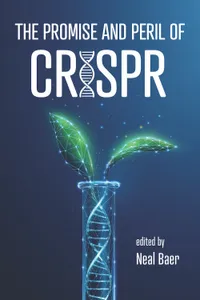
The Promise and Peril of CRISPR
$47.65 on Amazon
If you want to read more of this essay and others that discuss the potential harms of germline editing, you can read more in the recent book entitled "The Promise and Peril of CRISPR."

Rosemarie Garland-Thomson is professor emerita of English and bioethics at Emory University, as well as a disability justice and culture thought leader. She teaches disability studies, bioethics, American literature and culture and feminist theory. Her work develops the field of critical disability studies in the health humanities to bring forward disability access, inclusion and identity to a broad range of institutions and communities.
- Nicoletta Lanese Channel Editor, Health