















Arthur's Stone: A 5,700-year-old monument in England linked to the legend of King Arthur
The large stone table is considered one of the most recognizable Neolithic monuments in England.
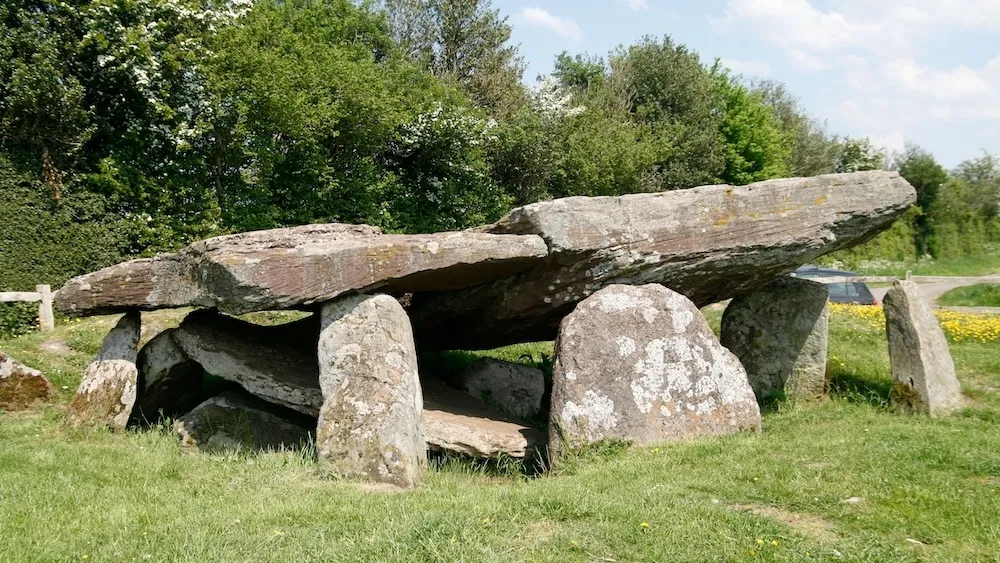
Name: Arthur's Stone
What it is: A Neolithic chambered tomb known as a dolmen
Where it is located: A hilltop in Herefordshire, England
When it was made: 3700 B.C.
What it tells us about the past:
Considered one of the most famous Neolithic monuments in England, this table-shaped dolmen consists of nine upright large stones that are topped by one massive capstone weighing approximately 28 tons (25 metric tons), according to English Heritage, a charity organization that oversees hundreds of historic sites in England.
Get the world’s most fascinating discoveries delivered straight to your inbox.
As early as the 13th century, people have linked the tomb to the mythical King Arthur, the ruler of the fictitious kingdom of Camelot. According to legend, King Arthur battled a giant in a duel at the site. As the giant fell to its death, it left behind imprints of its elbows in the side of one of the stones.
RELATED STORIES
Another tale says that marks on one stone were made when Arthur knelt down to pray. The monument also supposedly marks the burial place of Arthur.
More recently, archaeologists have discovered that the 5,000-year-old tomb was part of a vast ceremonial landscape that fed into the Halls of the Dead, which were large wooden buildings that were deliberately burned to the ground and replaced by three nearby earthen burial mounds, according to The University of Manchester.
Both Arthur's Stone and the Halls of the Dead could have been used as locations for ancient rituals.
Jennifer Nalewicki is former Live Science staff writer and Salt Lake City-based journalist whose work has been featured in The New York Times, Smithsonian Magazine, Scientific American, Popular Mechanics and more. She covers several science topics from planet Earth to paleontology and archaeology to health and culture. Prior to freelancing, Jennifer held an Editor role at Time Inc. Jennifer has a bachelor's degree in Journalism from The University of Texas at Austin.