













Panathenaic prize amphora: A pot brimming with olive oil awarded at the ancient Greek Olympics
Instead of a gold medal, victors at the ancient Greek Panathenaic Games received terra-cotta pots filled with Athenian olive oil from sacred trees.
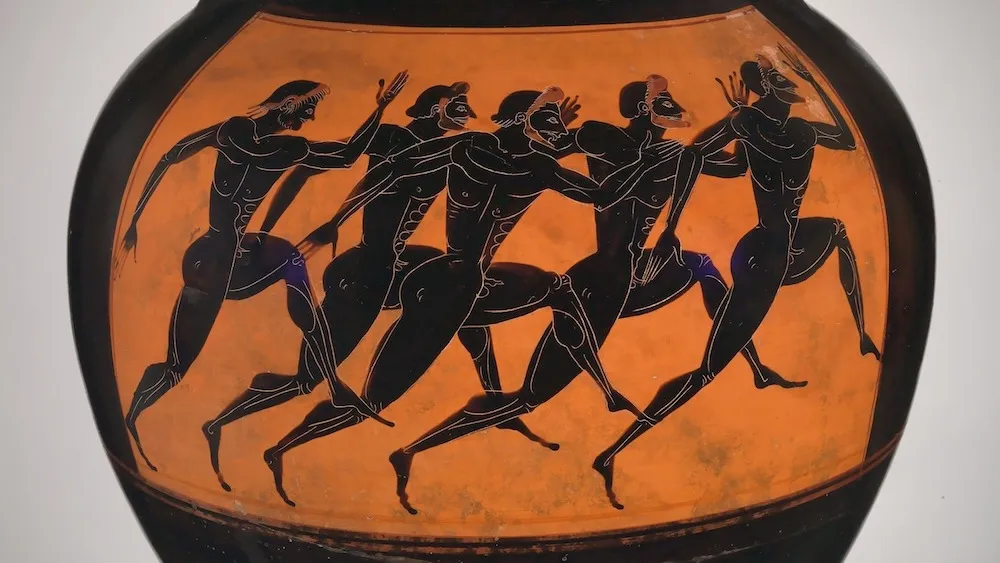
Name: Panathenaic prize amphora
What it is: A Greek terra-cotta pot known as an amphora
Where it is from: Vulci, Italy
When it was made: Circa 530 B.C., during Greece's Archaic period
Related: Venus of Brassempouy: The 23,000-year-old ivory carving found in the Pope's Grotto
What it tells us about the past:
Centuries before runners lined up on the track to compete in the Olympic Games, athletes participated in the Panathenaic Games, an athletic festival held every four years in Athens, according to Panathenaic Stadium.
Get the world’s most fascinating discoveries delivered straight to your inbox.
Unlike in today's Olympics — in which competitors receive gold, silver and bronze medals — each ancient winner received dozens of terra-cotta vases emblazoned with their specific sport and filled with Athenian olive oil, a highly "valuable prize," according to Harvard Art Museums.
The olive oil award given to Olympic champions came from the sacred groves of Athena, the patroness of Athens, according to the Metropolitan Museum of Art in New York City. In general, ancient Greeks considered olive trees "sacred," and they symbolized Zeus, the god of the sky and, later, the god of the Olympics, according to the Journal of Olympic History.
More Astonishing Artifacts
This particular amphora features a lineup of five runners during a footrace, a competition considered the "earliest known event in the Panathenaic Games," according to the Met. Athletes competed fully naked, since they thought their physiques might intimidate their competition, according to Southern Utah University.
The pot, which stands 24.5 inches (62 centimeters) tall, is attributed to "Euphiletos Painter." This anonymous artist was known for an art style called black-figure pottery, in which subjects were drawn in silhouette, according to the British Museum. This is just one of the many vases awarded to the victors at the Games, with other pots featuring charioteers, archers and boxers.
Jennifer Nalewicki is former Live Science staff writer and Salt Lake City-based journalist whose work has been featured in The New York Times, Smithsonian Magazine, Scientific American, Popular Mechanics and more. She covers several science topics from planet Earth to paleontology and archaeology to health and culture. Prior to freelancing, Jennifer held an Editor role at Time Inc. Jennifer has a bachelor's degree in Journalism from The University of Texas at Austin.