













Venus of Brassempouy: The 23,000-year-old ivory carving found in the Pope's Grotto
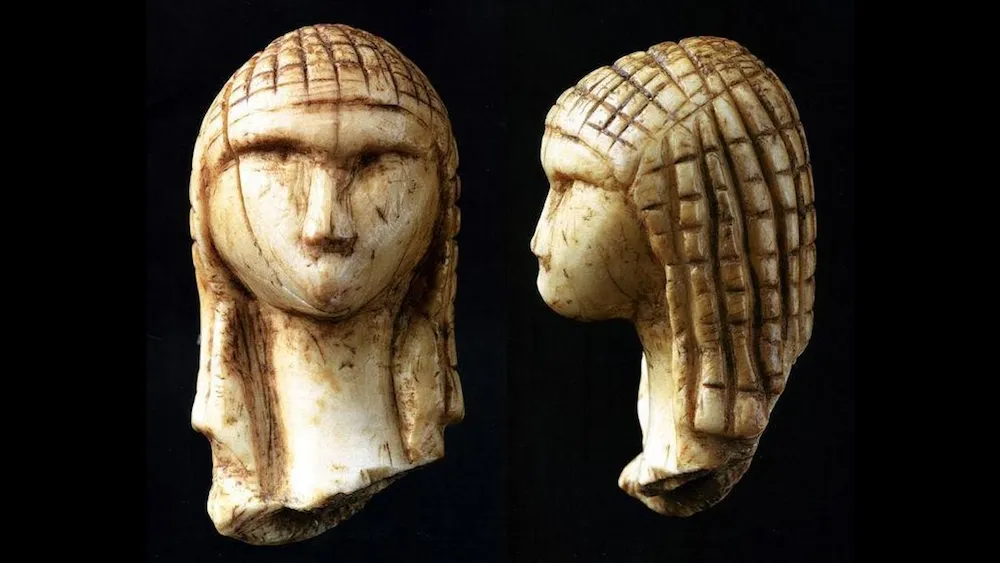
The palm-sized carving depicts a Neolithic woman wearing an ornate headpiece.
Name: Venus of Brassempouy
What it is: A lifelike figurine of a Neolithic woman carved out of the ivory core of a mammoth tusk.
Where it was found: Inside the Grotte du Pape ("Pope's Cave") in Brassempouy, a village in France, in 1894.
When it was made: Approximately 23,000 years ago
What it tells us about the past: Also known as "The Lady with the Hood," this prehistoric carving of a woman is prized for both its attention to detail and its realism, which can be seen in the crosshatched pattern used to create her headpiece and her distinct facial features, including her pupils, forehead, nose and chin. The piece is one of the earliest examples of a carving of a human face, according to France's National Archaeological Museum.
RELATED STORIES
The artifact, which measures 1.4 inches (3.5 centimeters) tall, is one of many Venus figures dating to the Upper Paleolithic, or Old Stone Age. Researchers think the figurine was once attached to a body, which has never been found, according to Visual Arts Cork.
Get the world’s most fascinating discoveries delivered straight to your inbox.
The purpose of the piece is unknown, but as with other examples of Venus figurines, it may have been created as a symbol of fertility, according to the World History Encyclopedia.
Jennifer Nalewicki is former Live Science staff writer and Salt Lake City-based journalist whose work has been featured in The New York Times, Smithsonian Magazine, Scientific American, Popular Mechanics and more. She covers several science topics from planet Earth to paleontology and archaeology to health and culture. Prior to freelancing, Jennifer held an Editor role at Time Inc. Jennifer has a bachelor's degree in Journalism from The University of Texas at Austin.