













Ancient Egyptian head cones: Mysterious headgear that could be related to sensuality and fertility rituals
Archaeologists remain uncertain about the purpose of these head cones, but it appears that ancient Egyptians associated them with "sensuality, sexuality and related notions."
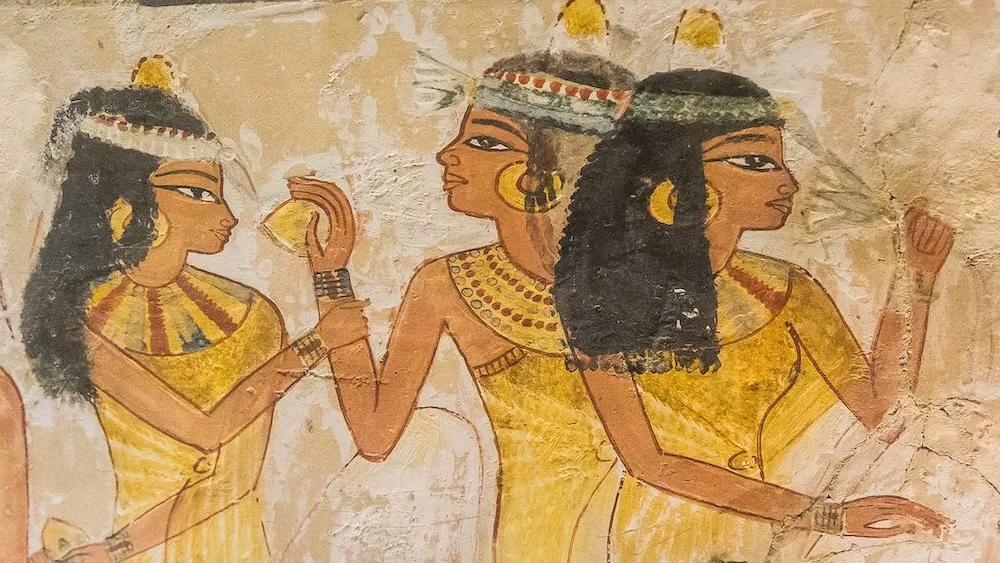
Name: Ancient Egyptian head cone
What it is: A cone-shaped ornamental hat worn by ancient Egyptians
Where it is from: Egypt
When it was made: The earliest known burials containing these "coffee cup"-sized caps are about 3,300 years old, according to a study in the journal Antiquity.
Related: Bison Licking Insect Bite: A 14,000-year-old lifelike figure carved from a weapon
What it tells us about the past:
Between 1550 and 30 B.C., many ancient Egyptian paintings and sculptures depicted men and women wearing small, conical adornments on top of their heads. The type of activities people did while wearing these caps varied greatly, with paintings showing them at funerary banquets and while hunting, playing music or even giving birth, according to the Antiquity study.
Get the world’s most fascinating discoveries delivered straight to your inbox.
Until recently, archaeologists had only seen the hats depicted in paintings and never found physical evidence of them in burials.
But in 2019, the Antiquity study described two burials at cemeteries in Amarna, an archaeological site in Egypt that was once its capital. The burials contained skeletons with head cones, proving that the accessories were more than simply stylistic motifs created by painters. An analysis of the remains revealed that the cones were made of beeswax and that neither individual appeared to have been wealthy. Rather, their skeletons indicated that they had been laborers and had experienced food shortages.
MORE ASTONISHING ARTIFACTS
Archaeologists remain uncertain about the hats' purpose. One previously proposed idea was that these caps were crafted from a type of perfumed unguent, or balm, that released a pleasant scent as it melted. Another possibility is that the cones were thought to help with fertility, as they are featured in paintings with Hathor, the fertility goddess.
"Scholars often link the cones specifically with sensuality, sexuality and related notions, as they are frequently associated in imagery with women, sometimes unclothed," the authors wrote in the Antiquity study.
Jennifer Nalewicki is former Live Science staff writer and Salt Lake City-based journalist whose work has been featured in The New York Times, Smithsonian Magazine, Scientific American, Popular Mechanics and more. She covers several science topics from planet Earth to paleontology and archaeology to health and culture. Prior to freelancing, Jennifer held an Editor role at Time Inc. Jennifer has a bachelor's degree in Journalism from The University of Texas at Austin.