













Scientists discovered the oldest termite mounds on Earth — and they're 34,000 years old
The world's oldest termite mounds have been collecting carbon from the atmosphere for thousands of years.

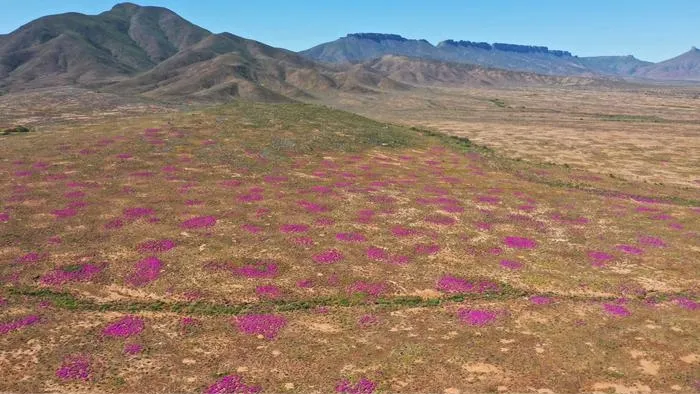
Scientists in South Africa have discovered the world's oldest known active termite mounds, which have been occupied for tens of thousands of years.
"Recent radiocarbon dating has revealed that these mounds are far older than any previously known, with some dating as far back as 34,000 years — that's older than the iconic cave paintings in Europe and even older than the Last Glacial Maximum, when vast ice sheets covered much of the northern hemisphere," Michele Francis, the lead author of the study published in May in the journal Science of the Total Environment, said in a statement.
The massive insect dwelling was discovered along the banks of the Buffels River in Namaqualand, a region along the west coast of South Africa where around 20% of the landscape is covered by such mounds. The residents of these ancient "little hills," called "heuweltjies" in Afrikaans, are southern harvester termites (Microhodotermes viator). As they go about their daily forage, these termites collect pieces of wood that they add to their nests. Over the years, these organic materials pile up and form a carbon-rich reservoir.
An earlier study by Francis, who is an environmental scientist at Stellenbosch University, and her team estimated that each termite mound could harbor about 15 tons (14 metric tons) of carbon.
So Francis was interested in understanding how groundwater, the atmosphere and the soil in these little hills interacted to lock away so much carbon. To do so, the team conducted a chemical analysis of the termite hills and characterized the chemical processes that transfer atmospheric carbon into the tiny hills. They found that as termites harvest organic materials and bring them into their nests, they disturb the soil and make it easier for water to infiltrate. Microbes in the soil then convert these caches of carbon into calcium carbonate, past research found.
During heavy rains, calcium carbonate in the mounds then chemically reacts with carbonic acid, which forms when atmospheric carbon dioxide dissolves in rainwater. The chemical cascade increases the sequestration of atmospheric carbon dioxide.
This process locks new carbon about 3 feet (1 meter) below the surface in long-term storage, Francis wrote in The Conversation.
Get the world’s most fascinating discoveries delivered straight to your inbox.
RELATED STORIES
"By studying these mounds, scientists can gain a better understanding of how to combat climate change, utilizing nature's own processes for carbon sequestration," she said in the statement.
The scientists estimated the age of these termite mounds through radiocarbon dating. The previously discovered oldest termite mounds found in Brazil were 4,000 years old.
"The discovery of the world's oldest termite mounds in Namaqualand is a testament to the incredible history hidden beneath our feet," Francis said in the statement. "These mounds not only illuminate the past but also offer vital clues for our future. As we continue to uncover the secrets of these ancient structures, they stand as a reminder of the delicate interplay between climate, environment, and life on earth."

Kristel is a science writer based in the U.S. with a doctorate in chemistry from the University of New South Wales, Australia. She holds a master's degree in science communication from the University of California, Santa Cruz. Her work has appeared in Drug Discovery News, Science, Eos and Mongabay, among other outlets. She received the 2022 Eric and Wendy Schmidt Awards for Excellence in Science Communications.