













Brain's 'Fairness' Spot Found

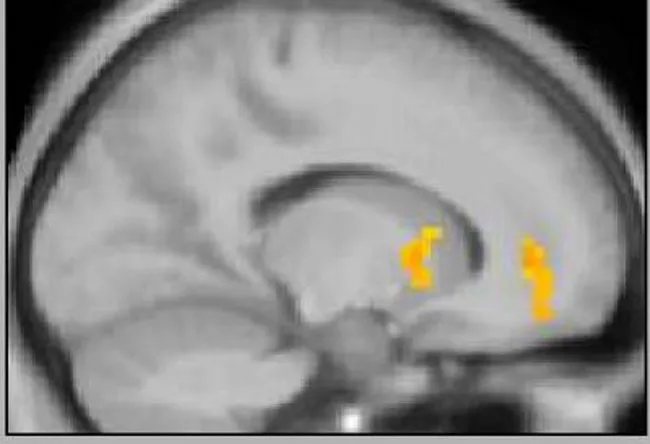
At some point in our lives, we've all cried "It's not fair!" In fact, it's human nature for us to dislike unequal situations, and we often try to avoid or remedy them. Now, scientists have identified the first evidence of this behavior's neurological underpinnings in the human brain.
The results show that the brain's reward center responds to unequal situations involving money in a way that indicates people prefer a level playing field, and may suggest why we care about the circumstances of others in the first place.
"Our study shows that the brain doesn’t just reflect self-interested goals, but instead, these basic reward processing regions of the brain seem to be affected by social information," said study author Elizabeth Tricomi, a professor of psychology at Rutgers University in New Jersey. "That might explain why what happens to other people seems to matter so much to us, even when it might not actually directly affect our own situation."
The study will be published Feb. 25 in the journal Nature.
Social science research indicates that humans are attuned to inequality, and we just don't like it. For instance, people donate to charity to help those not as fortunate as them, and societies provide welfare.
Despite this behavioral evidence, few studies have looked at the brain regions involved in the "it's not fair" phenomenon.
The study enrolled 40 male subjects, divided them into pairs, and had them participate in a monetary game of sorts. First, both pair members received $30. Then, they drew balls from a hat, labeled either "rich" or "poor." The rich participant got a $50 bonus, while the other person received no extra cash.
Get the world’s most fascinating discoveries delivered straight to your inbox.
The subjects then had their brains scanned in an fMRI imaging machine while they were asked how they felt about hypothetical transfers of money to themselves or to their partners.
The researchers monitored signals in the striatum and prefrontal cortex, parts of the brain thought to be involved in how people evaluate rewards.
They found that the brain activity in these areas was greater for the "rich" subjects when money was transferred to the other player than to themselves, whereas the "poor" subjects' brains showed the opposite pattern.
In other words, everyone seemed to prefer a financial equality. The brain activity of "rich" players indicated they preferred to close the monetary gap, while the "poor" players seemed to prefer transfers that boosted them up toward the other players' monetary level.
"Overall, it looks like these regions were responding most when the outcome would be the most fair, and the least when the outcome would be the least fair," Tricomi said.
In addition, while the "rich" participants said they liked transfers of money both to themselves and to the other player, their brain activity actually went down as their own payments went up, indicating that the brain responses were stronger than the participant's own feelings about the situation, the researchers say.
Tricomi conducted the work with researchers at Caltech and Trinity College Institute of Neuroscience, Dublin.

Rachael is a Live Science contributor, and was a former channel editor and senior writer for Live Science between 2010 and 2022. She has a master's degree in journalism from New York University's Science, Health and Environmental Reporting Program. She also holds a B.S. in molecular biology and an M.S. in biology from the University of California, San Diego. Her work has appeared in Scienceline, The Washington Post and Scientific American.