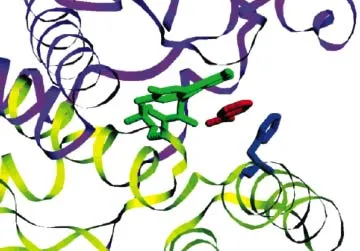
Amino acids, those not employed in creating protein and life, can improve a cancer therapy protein's activity by more than 30-fold.
Scientists say this opens the door to experimenting with these novel compounds throughout proteins and, in the future, in organisms, possibly creating drugs that work better but have fewer side effects.
Life normally uses 20 amino acids as the building blocks for proteins, but a vast number of other amino acids exist. By using these amino acids--known as unnatural amino acids--in proteins, "we have access to many more shapes and charges as compared to nature," researcher Ryan Mehl, a biochemist at Franklin and Marshall College in Lancaster, Penn., told LiveScience.
Latest Videos FromLive Science
No unnatural amino acids until now had been shown to improve the activity of any enzymes, which are proteins essential to life's activities. Mehl and his colleagues experimented with the enzyme nitroreductase, which helps activate cancer therapy drugs.
One amino acid within nitroreductase is key to it binding to the drugs it activates. The researchers tried replacing this amino acid with all the other natural ones and eight unnatural amino acids, with the resulting enzyme variants generated by bacterial cells in lab dishes.
Using the unnatural amino acids, the scientists created a nitroreductase variant more than 30 times more efficient than normal. It was also more than twice as good as the best variant that used a natural amino acid replacement.
In the future, this could mean patients could use reduced amounts of the cancer drug, which might cut down on bad side effects. Improving enzymes for commercial use should be feasible in the near future, Mehl said. He and his colleagues report their findings in the Journal of the American Chemical Society.
"We can improve upon nature by working with only one site--just imagine the potential of using these amino acids throughout a protein or organism," Mehl said. While "evolving a whole protein instead of one site will be technically challenging but is currently feasible," he cautioned "evolving unnatural organisms in a convincing way might be a couple years off."