People Really Do Wash Away Sins

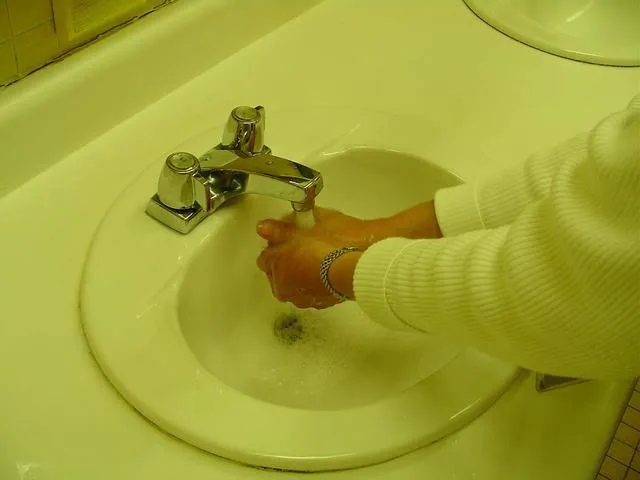
Rituals that cleanse the body to purify the soul are at the core of religions worldwide. Now scientists find these ceremonies apparently have a psychological basis.
Researchers discovered sins actually seem to urge people to clean themselves, a phenomenon they dubbed the "Macbeth effect" after dramatized murderess Lady Macbeth, who vainly tried scrubbing her hands clean of imaginary blood in Shakespeare's famed Scottish play.
Intriguingly, the researchers also found purifying the body then helped people absolve their consciences.
"Showering and handwashing occur daily, but now we find these core routines can really have a psychological impact," behavioral researcher Katie Liljenquist at Northwestern University in Chicago told LiveScience.
Future studies could see whether "living in a very clean environment facilitates more ethical behavior, or ironically licenses unethical behavior," Liljenquist added.
Liljenquist and her colleague Chen-Bo Zhong at the University of Toronto in Canada first asked undergraduate student volunteers to focus on ethical or unethical deeds from their past. The volunteers were more likely to interpret the word fragments "W _ _ H" as "wash" and "S _ _ P" as "soap" if they had been thinking of an unethical deed, and to choose an antiseptic wipe instead of a pencil as free gift.
The investigators also asked volunteers to hand-copy a short story written in the first person about either helping or sabotaging a coworker. Zhong and Liljenquist found the students who copied the unethical story were more likely to then rate cleansing products such as toothpaste and detergent as more desirable than noncleansing products such as batteries and candy bars in what the participants thought was an unrelated marketing study.
Get the world’s most fascinating discoveries delivered straight to your inbox.
In their last set of experiments, the researchers asked volunteers to first remember an unethical deed and then either gave them the chance to wash their hands or not. When the students were afterward asked whether they would volunteer without pay for another research study to help out a desperate graduate student, 74 percent of those who had not washed their hands offered to help, while only 41 percent of the participants who had a chance to wash their hands did. This suggested volunteers who did not get the chance to clean themselves felt a need "to absolve their consciences," Liljenquist said.
"Past studies have shown there are definite overlaps in the brain in the regions stimulated by moral disgust and physical disgust, the kind you get to potentially bad food or other things you'd evolve to want to avoid," she added.
Whether the psychological impact of cleansing rituals existed before religion adopted them or whether such an impact arose after religions ingrained cleansing rituals into society remains an as yet unresolved chicken-or-egg question. To answer it, Liljenquist said future experiments can explore whether a person's level of religiosity moderates the Macbeth effect and what specific negative emotions trigger it the most deeply in people.
The researchers reported their findings in the Sept. 8 issue of the journal Science.