













Fingerprint Technology Gets High-Tech Upgrade

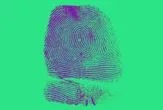
Traditional methods for obtaining fingerprints, which involve powders, liquids or vapors, can destroy the print for further analysis.
A new technique uses X-rays to detect salts from a person's sweat. If there are enough of these salty residues, a fingerprint can be identified without altering the sample.
The alternative could prove advantageous in taking prints from certain difficult substances, like paper, wood, leather, plastic, and even human skin. It may also be useful in obtaining fingerprints from children, who have less oil on their skin.
And more information can be obtained from some prints. Bits of a murder suspect's last meal might be detected in the residue of a print, for example.
A 'valuable complement'
Scientists from Los Alamos National Laboratory have used a thin beam of X-rays to illuminate prints, in a technique called micro-X-ray fluorescence (MXRF). Elements like sodium, potassium and chlorine, which are present in human sweat, will absorb X-rays and reemit light - or "fluoresce" - at lower frequencies.
Preliminary laboratory studies have shown that the sweat deposits form an outline of the person's fingerprints. Identification was also possible when hands were covered with lotion, soil, saliva or sunscreen - contaminants that can foil the traditional tools of the crime scene investigator.
Get the world’s most fascinating discoveries delivered straight to your inbox.
"This process represents a valuable new tool for forensic investigators that could allow them to nondestructively detect prints on surfaces that might otherwise be undetectable by conventional methods," said Chris Worley, who led the research. "It won't replace traditional fingerprinting, but could provide a valuable complement to it."
The MXRF method is still two to five years from real-world application, the researchers say. It is limited by the fact that sometimes the amount of detectable material is too small. The X-rays do not see lighter - more common - elements, like carbon, nitrogen and oxygen.
The research was presented Sunday at the national meeting of the American Chemical Society.
Brief history
In the late 19th Century, scientists began describing the uniqueness and permanence of fingerprints. Sir Francis Galton classified fingerprints based on their patterns of arches, loops, and whorls. In 1901, a criminal identification system based on Galton's work was put in place in England. The classification method is still widely used today.
Around the same time, fine-powder dusting was found useful in highlighting the relief pattern in an oily finger smudge - essentially allowing a record to be taken by a camera or lifted with an adhesive material.
Over time, other ways have been developed for making prints more visible. All of these contrast-enhancement techniques require the addition of a substance of some sort, which can limit any subsequent analysis - like DNA extraction - of the print.
Furthermore, some chemical agents and dyes can damage the object on which the fingerprint is located. After a full crime scene investigation, entire walls may need to be repainted and furniture reupholstered.
Extra information
The MXRF technique uses X-rays that do little or no damage to the piece of evidence, so that investigators can perform more tests, as well as archive the print with more conventional means if desired.
But besides revealing fingerprints, the MXRF method could allow for the detection of other elements. For example, a high concentration of sulfur might be evidence for gunpowder. And potassium nitrate, detectable as an unusually high level of potassium, could imply explosives were involved.
There also may be clues mixed in with a salty fingerprint - like soil or food particles - that could reveal the movements of a suspect or a missing person.
