













Prehistoric Toothless Fish May Get Protection

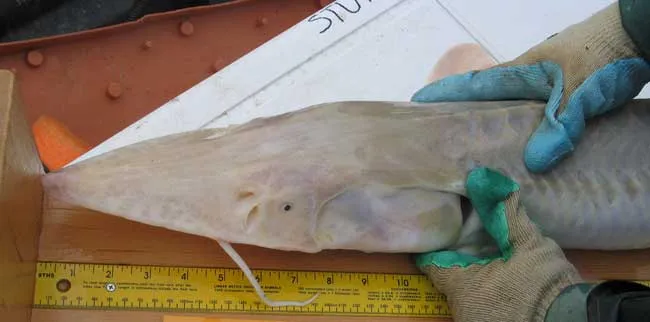
Shovelnose sturgeon are not endangered in their native Mississippi and Missouri rivers, but catching them in many of these waters may become illegal under a proposal by the U.S. Fish and Wildlife Service (USFWS) that aims to protect their relatives, the endangered pallid sturgeon.
If approved, the rule will be made public in mid to late August, according to Diane Katzenberg, an agency spokeswoman.
Sturgeon evolved from a group of fishes dominant during the late Cretaceous period 70 million years ago, according to the USFWS, which describes the pallid sturgeon as resembling a dinosaur, "with its flattened shovel-shaped snout, bony plates and long reptile-like tail." Each type of sturgeon has a toothless mouth positioned under a snout for sucking up small fish and other food.
Pallid sturgeon joined the endangered species list in 1990, their numbers decimated by habitat loss. Fishing for their smaller and more plentiful cousins — one shovelnose female can carry half a pound a roe, worth about $50 wholesale — poses another threat.
In research published in the Journal of Applied Ichythology last year, researchers confirmed that two of 113 sturgeon harvested on five dates during the 2007 season were pallids. These identifications were made using DNA analysis, and don't include pallids released by fishermen.
Extrapolating this rate out for the 2005 through 2007 seasons, the researchers, led by Phil Bettoli of the Tennessee Technological University, calculated that at least 169 pallids were harvested from the Tennessee waters of the Mississippi River. They called this number "probably a minimum estimate."
While collecting data, they also discovered one pallid sturgeon dead among the 53 sturgeon caught, or lost, in a ghost net.
Get the world’s most fascinating discoveries delivered straight to your inbox.
The proposal to treat the shovelnose sturgeon as a threatened species under the Endangered Species Act would only apply to areas where the two species' ranges overlap, which include not only Tennessee but areas from Montana to Louisiana.
The work of Bettoli's team provided "another piece of supporting information" for the proposed change to the shovelnose sturgeon's status, said USFWS spokesman George Jordan told LiveScience. The proposal, however, has met some resistance from fisherman who derive their livelihood from harvesting roe from a number of species, according to Jordan.
- Gallery: Freaky Fish
- 10 Species You Can Kiss Goodbye
- World's Ugliest Animals
