Civilization-Collapsing Megadroughts of Medieval Times Could Be in Store for a Warming Earth

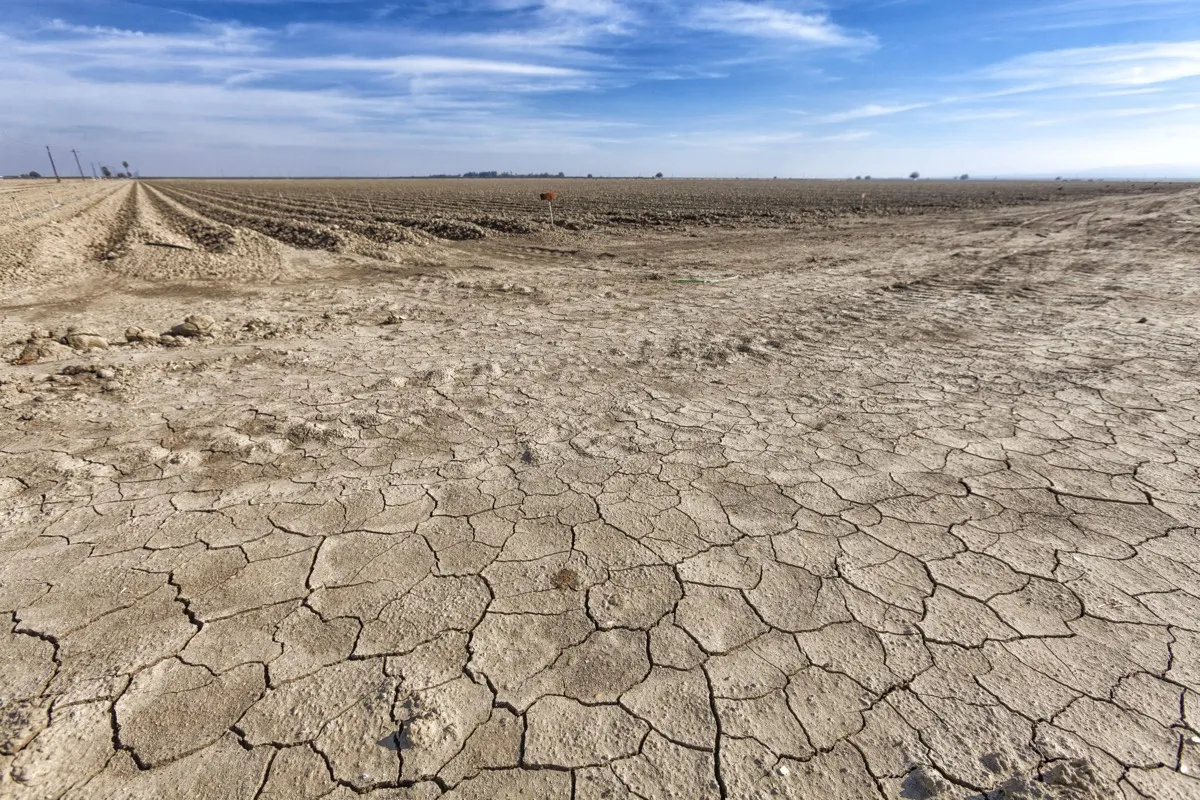
Scientists may have unraveled the mystery of what triggered decade-long droughts during medieval times in the American Southwest. These so-called megadroughts were so devastating that entire civilizations may have collapsed in their wake.
These findings suggest the risk of megadroughts may rise due to global warming, scientists added.
From the 800s to the 1400s, about a dozen megadroughts struck the American Southwest, and all lasted longer than a decade.
"There weren't a whole lot of people there compared to today, but prior work has suggested that a number of native societies in the Southwest experienced megadroughts that were tied to the collapse of their civilizations," said study lead author Nathan Steiger, a climate scientist at Columbia University's Lamont-Doherty Earth Observatory. "People don't think megadroughts are the only reason why they collapsed, but they do think they were major contributing factors."
These megadroughts mysteriously ceased in the American Southwest about the year 1600. Scientists have sought to uncover what caused these past giant dry spells to shed light on whether, how and where they might happen in the future. [Nature's Arches: Photos of Stunning Sandstone in the American Southwest]
"Eighty percent or more of the water used by the American West is used for agriculture," Steiger said. "A megadrought could fundamentally change how communities are supported, how farmers in the West and California in particular do work, what they plant, if farming is even possible or not."
Now, the researchers suggest they may have for the first time developed "a comprehensive theory for why there were megadroughts in the American Southwest, and why they stopped," Steiger said.
Get the world’s most fascinating discoveries delivered straight to your inbox.
Steiger and his colleagues developed a global reconstruction of aquatic and climate data and sea-surface temperatures spanning the past 2,000 years. They identified 14 droughts lasting more than a decade, all of which took place before 1600.
The scientists found three key factors were apparently linked to each medieval megadrought. The first involved "positive radiative forcing" — that is, a rise in the amount of energy that Earth absorbed from the sun. The next involved warming in the North Atlantic Ocean. The last factor involved severe and frequent La Niña events — unusually cool waters in a belt 5,000 miles (8,000 kilometers) long across the equatorial Pacific Ocean that previous research found could trigger floods, heat waves, blizzards and hurricanes worldwide.
During medieval times in the American Southwest, a drop in volcanic activity — which would have spewed out ash to block the sun — along with an increase in solar activity such as solar flares likely increased the amount of heat the area absorbed (positive radiative forcing). The overall rise in heat would have dried out the area. At the same time, warmer Atlantic conditions combined with strong, frequent La Niñas could have reduced rainfall.
All in all, the scientists found La Niña events played a role that was twice as important at causing megadroughts as the other two factors. La Niña is Spanish for "little girl" and is the counterpart of El Niño, which is Spanish for "little boy" and involves unusually warm waters in the same area of the equatorial Pacific Ocean. South American fisherman named El Niño for the baby Jesus, after noticing that the ocean would heat up around Christmastime.
The researchers cautioned that any potential future megadroughts will remain difficult to predict, since future El Niños and La Niñas remain difficult to model and forecast. However, they also cautioned these megadroughts may return in the near future due to emissions of greenhouse gases such as carbon dioxide, which trap heat from the sun and boost positive radiative forcing,
The scientists detailed their findings online July 24 in the journal Science Advances.
- Top 9 Ways the World Could End
- 8 Ways Global Warming Is Already Changing the World
- 10 Surprising Ways Weather Has Changed History
Originally published on Live Science.