













The Ocean’s Biggest Waves Are Getting Even Bigger

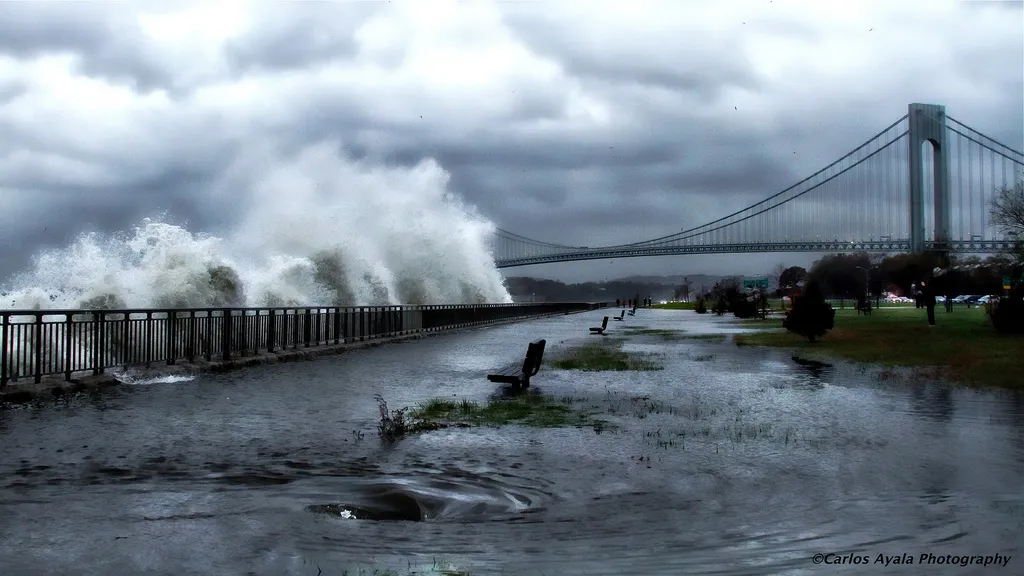
Ocean waves all over the world are growing bigger, driven by an increase in extreme winds.
That's the upshot of a new study that used 33 years of satellite data to monitor changes in the ocean. The researchers, a pair of scientists from the University of Melbourne in Australia, have built the largest-ever database of wind and wave data, and found that both increased significantly between 1985 and 2018.
The most extreme changes involved the fastest winds and highest waves: The top 10% of winds increased in speed by 4.9 feet per second (1.5 meters per second), and the top 10% of waves increased in height by a foot (30 centimeters) over the same period. That amounts to an 8% increase in the speed of extreme winds, and a 5% increase in the height of extreme waves. The findings were published Thursday (April 25) in the journal Science.
"Although increases of 5% and 8% might not seem like much, if sustained into the future such changes to our climate will have major impacts," Ian Young, one of the study authors, said in a statement.
Most importantly, they said, more intense waves mean increased risk of flooding in coastal communities, and faster erosion of coastal lands. The changes could speed the rate at which low-lying regions end up underwater, accelerating the effects of sea level rise.
To confirm that this past data, taken from many different satellites, was correct, the researchers compared the findings to decades of data from 80 worldwide ocean buoys. They found the two datasets matched neatly.
The Southern Hemisphere feels the strongest effects of the growing waves, the researchers reported. But people in the Northern Hemisphere don't get a reprieve.
Get the world’s most fascinating discoveries delivered straight to your inbox.
"These changes have impacts that are felt all over the world," Young said.
The study, part of an effort to refine global climate models, should also help researchers understand atmosphere-water interactions, which depend in part on the roughness of the waters, the authors noted.
- Top 10 Deadliest Natural Disasters in History
- Tsunamis That Changed History
- Waves of Destruction: History's Biggest Tsunamis
Originally published on Live Science.
