













Mysterious New Henge in England (Photos)

Mysteries widen

Archaeologists have yet another monument to add to the long list of mysterious henges in England. This spring, they discovered a Neolithic earthwork and burial site that could date back to 2000 B.C. [Read the full story here]
Newbold Henge

The hidden monument was found and excavated ahead of a housing construction project at Newbold-on-Stour in England.
In the trenches
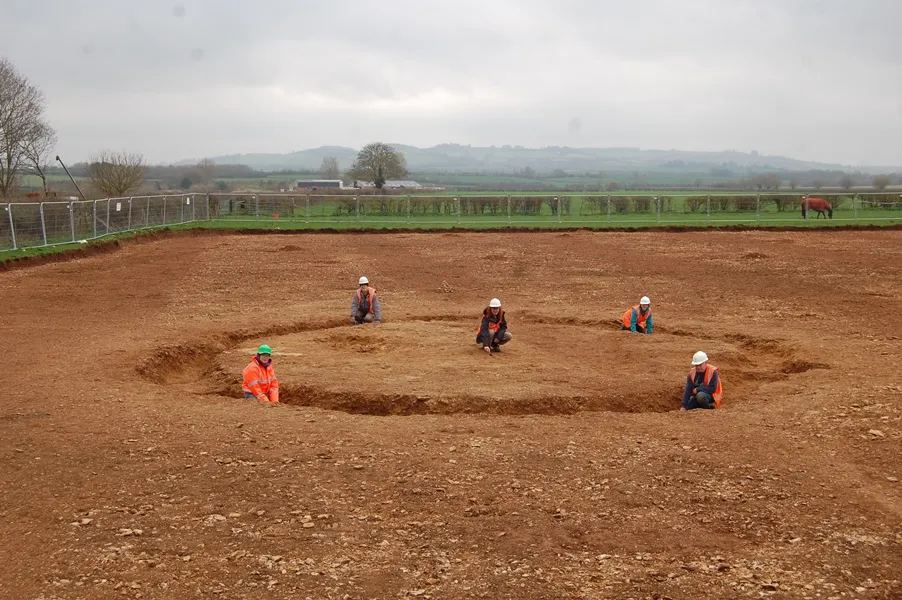
The henge had a pretty simple layout: a circular ditch surrounding an embankment that might have been used for rituals or ceremonies, though the purpose of this monument remains a mystery.
Skeletal remains

Five burials were found within the monument, and researchers with Archaeology Warwickshire say these skeletons are in good condition for their age.
Ancient arrangement

Buried with their knees curled, the bodies appear to be deliberately arranged within in the ditch, with some facing to the inner part of the monument and some facing out. Scientific analysis could prove whether they were part of the same family, or buried as a group.
Earthwork from above
Besides a few antler fragments, no artifacts were found at the site. The archaeologists said they will be looking closely at soil samples for microscopic clues about this environment like pollen and plant remains.
Get the world’s most fascinating discoveries delivered straight to your inbox.
