













Moon Casts Shadow Over Patagonia in Stunning 'Ring of Fire' Eclipse Photo

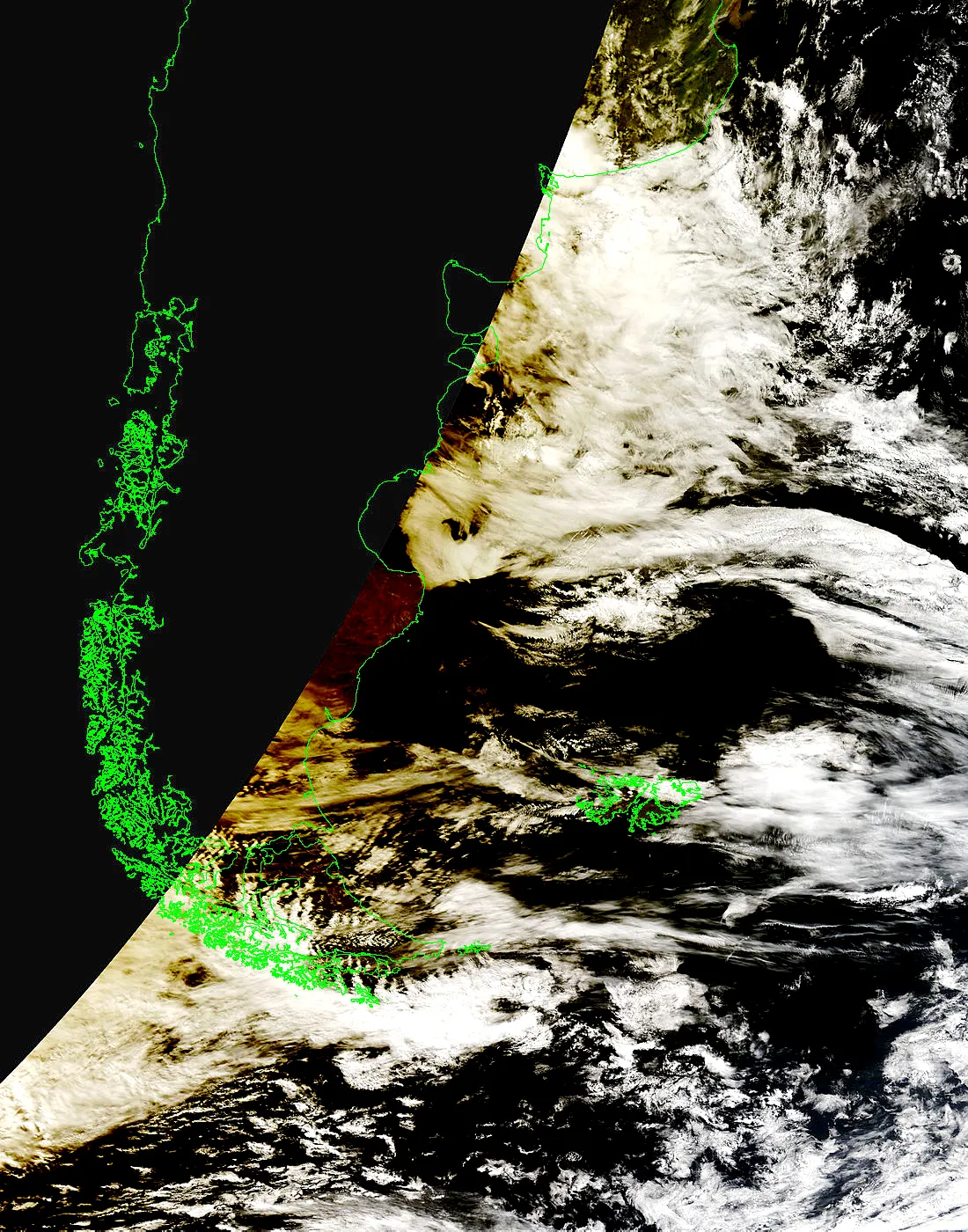
Last weekend, the moon crossed the face of the sun in a so-called annular solar eclipse, creating what looked like a ring of fire as the moon covered most of the light of our nearest star. But spectacular eclipse views weren't limited to skywatchers on the ground: During the celestial event, a NASA satellite in orbit spied the moon casting its shadow across the tip of South America.
On Sunday (Feb. 26), the solar eclipse was visible along a narrow line across the Southern Hemisphere. As the moon passed in front of the sun, onlookers could see the bright edge of the sun from behind the moon. Annular solar eclipses occur when the moon is too far from Earth to fully obscure the view of the sun, according to NASA.
The annular eclipse, nicknamed a "ring of fire" eclipse, casts a shadow on Earth, so while some people along the eclipse's path were treated to the sight of a fiery ring in the sky, the view from space was even more ethereal. [The 8 Most Famous Solar Eclipses in History]
Over the weekend, NASA's Terra satellite captured an image of the annular eclipse casting a shadow over Patagonia. Under the moon's shadow, the lush landscape took on a yellowish-brown hue. According to NASA officials, it is the shadow from the eclipse that causes Patagonia's colors to appear to change.
Two to four solar eclipses occur each year, according to NASA, and a total solar eclipse — dubbed the Great American Solar Eclipse because it will be visible across much of the U.S. — will occur in August. Though annular eclipses are striking, the complete darkness caused by a total solar eclipse also allows skywatchers to see brighter stars and planets that are typically obscured by the brightness of the sun.
The total solar eclipse on Aug. 21 will be the first of its kind to be visible from the United States mainland since 1979. It will also be the first in 99 years to extend from coast to coast, from Oregon to South Carolina.
Original article on Live Science.
Get the world’s most fascinating discoveries delivered straight to your inbox.
