













5 Key Facts About Brain-Eating Amoebas

A young woman who went white-water rafting in North Carolina contracted a rare, brain-eating amoeba and died, according to reports.
The 18-year-old, who was from Ohio, was on a trip with a church youth group last week, and visited an outdoor recreation center with white-water rafting in Charlotte, North Carolina, according to NBC news station WCMH in Columbus, Ohio. Health officials are still investigating the case, but it is suspected that she contracted the infection when her raft turned over and she went underwater.
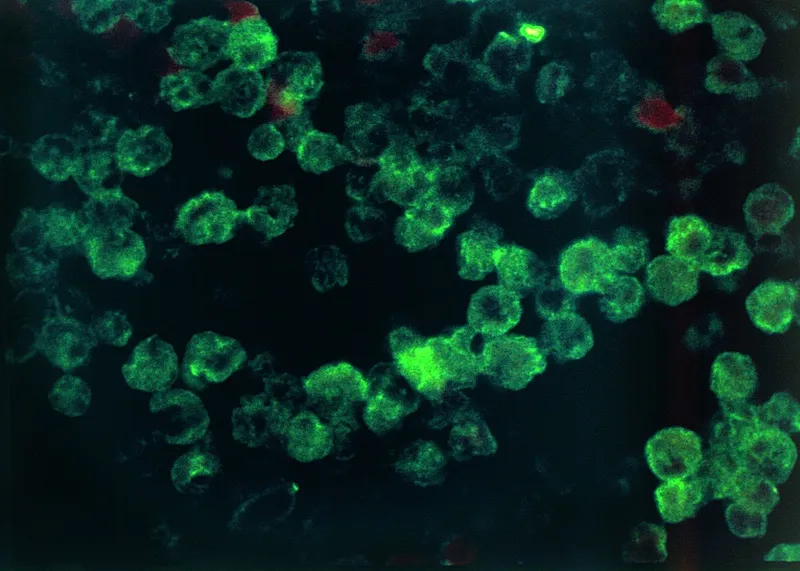
The deadly infection is caused by a single-celled organism called Naegleria fowleri, according to the Centers for Disease Control and Prevention. Here are five key facts about these infections.
People usually become infected from warm freshwater lakes and rivers.
This amoeba likes to live in warm water, including warm lakes and rivers, as well as hot springs. The organism may also be found in warm pools that are not properly chlorinated, and in water heaters, the CDC says. It can live in temperatures as high as 115 degrees Fahrenheit (46 degrees Celsius), and can sometimes survive at higher temperatures for short periods.
In the United States, most brain-eating-amoeba infections occur in bodies of freshwater in Southern states. Infections are most common during the summer months, especially when it is hot for prolonged periods, the CDC says.
Naegleria fowleri is not found in the ocean.
Get the world’s most fascinating discoveries delivered straight to your inbox.
The amoeba gets to the brain through the nose.
People do not become infected withNaegleria fowleri by swallowing water. Rather, infections happen when water containing this amoeba goes up the nose and enters the brain. Once in the brain, the amoeba destroys brain tissue, which results in brain swelling and usually death, the CDC says.
Early symptoms, which include headache, fever, nausea and vomiting, can occur from one to nine days after infection.
Infection with this brain-eating amoeba is very rare.
From 2006 to 2015, there were just 37 cases ofNaegleria fowleri infection in the United States, even though millions of people go swimming each year, according to the CDC. For comparison, there were 34,000 drowning deaths from 2001 to 2010.
Very few people survive these infections.
Infection with this brain-eating amoeba is nearly always fatal. Of the 138 people who were infected withNaegleria fowleri in the United States between 1962 and 2015, just three survived (which means the infection has a fatality rate of nearly 98 percent), according to the CDC. The last person to survive infection with Naegleria fowleri was a 12-year-old girl in Arkansas, who contracted the infection in 2013. Doctors treated her with a number of anti-fungal medications, as well as an experimental drug called miltefosine, which was first developed to treat breast cancer but also had been shown to kill the amoeba in lab experiments.
There are a few things you can do to lower your risk of infection.
Researchers don't know how to get rid of naturalNaegleria fowleri in lakes, rivers and other freshwater sources, so people who go swimming in warm freshwater should assume that there is a low risk of infection, the CDC says. If you choose to go swimming in warm freshwater, you can try to avoid having water go up your nose by holding your nose closed, using nose clips or keeping your head above water, the CDC says.
Original article on Live Science.

Rachael is a Live Science contributor, and was a former channel editor and senior writer for Live Science between 2010 and 2022. She has a master's degree in journalism from New York University's Science, Health and Environmental Reporting Program. She also holds a B.S. in molecular biology and an M.S. in biology from the University of California, San Diego. Her work has appeared in Scienceline, The Washington Post and Scientific American.