













Adderall Misuse Is a Growing Problem, Experts Warn

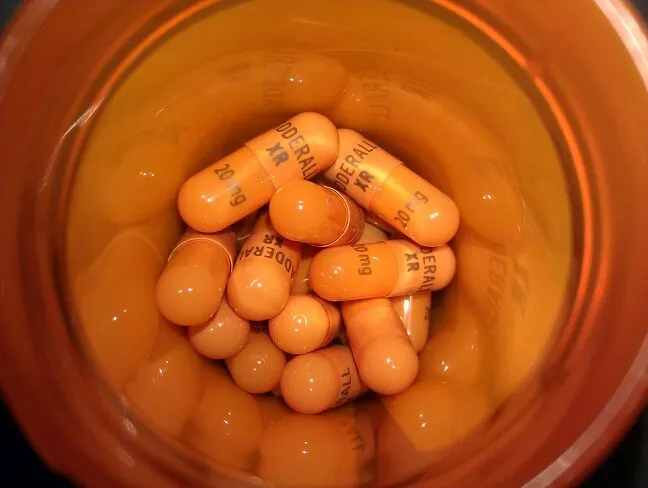
Improper use of the stimulant Adderall is becoming a bigger problem among young adults — a growing percentage say they use the drug without a prescription, a new study finds.
The results from a nationwide health survey show that from 2006 to 2011, the percentage of adults who said they took Adderall without a prescription increased from 0.73 percent to 1.2 percent. The percentages themselves may seem small, but that increase translates to a rise in misuse of 67 percent.
Most of this Adderall misuse was among 18- to 25-year-olds, the researchers said.
What's more, emergency room visits related to Adderall use increased by 156 percent (rising from 0.34 percent of visits to 0.87 percent of visits) during the study period. However, prescriptions for the drug among adults remained unchanged, the study found.
Young adults should be aware that Adderall can cause serious side effects, including high blood pressure and stroke, the researchers said. It also increases the risk of depression, bipolar disorder and unusual behaviors, such as aggression.
"In college, especially, these drugs are used as study-aid medication to help students stay up all night and cram," study co-author Dr. Ramin Mojtabai, a professor of mental health at Johns Hopkins Bloomberg School of Public Health, said in a statement.
"Our sense is that a sizable proportion of those who use them believe these medications make them smarter and more capable of studying," Mojtabai said. "We need to educate this group that there could be serious adverse effects from taking these drugs and we don't know much at all about their long-term health effects." [The Drug Talk: 7 New Tips for Today's Parents]
Get the world’s most fascinating discoveries delivered straight to your inbox.
Because the number of Adderall prescriptions in the U.S. didn't change during the study period, the findings suggest that more people are taking drugs that are prescribed to others. More than half of the people who took Adderall without a prescription said they got the drug from friends or family members.
One way to combat this problem could be to have physicians enter prescriptions for Adderall or other stimulants into a database, so that doctors could check whether a patient is receiving multiple prescriptions for stimulants from multiple doctors, the researchers said. Such databases already exist for prescription painkillers.
The study is published today (Feb. 16) in the Journal of Clinical Psychiatry.
Follow Rachael Rettner @RachaelRettner. Follow Live Science @livescience, Facebook & Google+. Original article on Live Science.

Rachael is a Live Science contributor, and was a former channel editor and senior writer for Live Science between 2010 and 2022. She has a master's degree in journalism from New York University's Science, Health and Environmental Reporting Program. She also holds a B.S. in molecular biology and an M.S. in biology from the University of California, San Diego. Her work has appeared in Scienceline, The Washington Post and Scientific American.