













Compounds in Flax & Sesame Seeds May Prevent Weight Gain

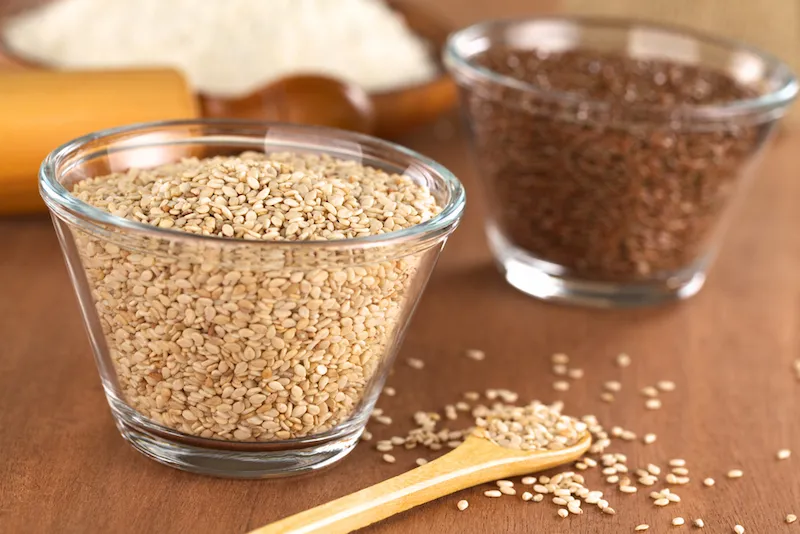
Eating a plant-based diet is known to be good for your waistline, but now a new study has zeroed in on specific plant compounds — found in foods such as flax and sesame seeds — that may help prevent or slow weight gain.
The study found that women who consumed high levels of these compounds, called lignans, tended to weigh less and gain less weight over time, compared with women who didn't consume these compounds in high amounts.
The findings are preliminary, and more studies are needed to confirm the results in larger populations, the researchers said. Still, these findings "support the notion that increased lignan consumption might potentially lead to less weight gain," the researchers, from Harvard School of Public Health, wrote in the Aug. 18 issue of the American Journal of Epidemiology.
Earlier studies in animals have suggested that lignans may play a role in regulating weight. Flax and sesame seeds are rich in lignans, but the compounds are also found in lower amounts in other plant-based foods, including whole grains, nuts, fruits, vegetables, coffee, tea and wine, the researchers said.
In the new study, the researchers analyzed information from about 1,000 women, who gave urine samples at the study's start, and then were followed for about 10 years. The urine samples were analyzed for two compounds, called enterodiol and enterolactone, which are formed when bacteria in people's gut break down lignans in foods.
At the start of the study, the women with the highest levels of these compounds in their urine had the lowest body mass index (BMI). For example, among women with the highest levels of enterolactone, the average BMI was 24.6, compared to an average BMI of 27.5 among women with the lowest levels of enterolactone. [Lose Weight Smartly: 7 Little-Known Tricks that Shave Pounds]
In addition, having higher levels of these lignans was linked with less weight gain over time. Women with the highest levels of enterodiol in their urine gained about 0.6 pounds (0.27 kilograms) less per year than those with the lowest levels of enterodiol, the study found.
Get the world’s most fascinating discoveries delivered straight to your inbox.
"Our data suggest that higher urinary excretion of lignan metabolites, especially enterodiol, is associated with modestly slower weight gain," the researchers said.
It's not clear exactly how these lignans may act to prevent weight gain. But these lignans are similar in structure to the hormone estrogen, and may be able to influence body weight by binding to the receptors for estrogen, the researchers said.
The researchers noted that the study assessed lignan levels in urine at one point in time, and future studies should examine levels more than once. In addition, because the study involved women who were mainly of European ancestry, future studies are needed to see if the results apply to men and people of other ethnicities, the researchers said.
Follow Rachael Rettner @RachaelRettner. Follow Live Science @livescience, Facebook & Google+. Original article on Live Science.

Rachael is a Live Science contributor, and was a former channel editor and senior writer for Live Science between 2010 and 2022. She has a master's degree in journalism from New York University's Science, Health and Environmental Reporting Program. She also holds a B.S. in molecular biology and an M.S. in biology from the University of California, San Diego. Her work has appeared in Scienceline, The Washington Post and Scientific American.