Egyptians Brewed Beer in Tel Aviv 5,000 Years Ago

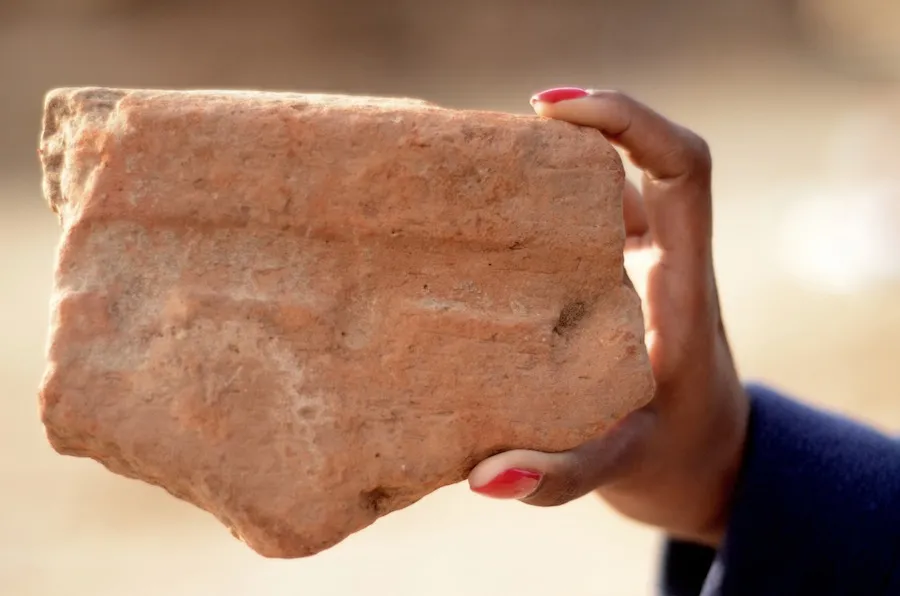
Tel Aviv's reputation as a party city for expats might have started 5,000 years ago.
During the Bronze Age, Egyptians were making beer in what is today downtown Tel Aviv, new archaeological evidence suggests.
These pits held Egyptian-style pottery that dated back to the Early Bronze Age I, a period that lasted from 3500 B.C. to 3000 B.C. [In Photos: Early Bronze Age Chariot Burial]
"On the basis of previously conducted excavations in the region, we knew there is an Early Bronze Age site here, but this excavation is the first evidence we have of an Egyptian occupation in the center of Tel Aviv at that time," Diego Barkan, an archaeologist who was conducting the excavation on behalf of the IAA, said in the statement.

Barkan and his colleagues found hundreds of pottery fragments, including broken pieces of large ceramic basins traditionally used to prepare beer — a staple of the Egyptian diet.
The clay that was used to create these basins had been mixed with straw or other organic materials as strengthening agents. This method wasn't used in the local pottery industry in Israel, but straw-tempered vessels have been found before at other Egyptian sites — notably, the Egyptian administrative building that was excavated at En Besor in southern Israel, Barkan explained.
"This is also the northernmost evidence we have of an Egyptian presence in the Early Bronze Age I," Barkan said. "Until now, we were only aware of an Egyptian presence in the northern Negev and southern coastal plain, whereby the northernmost point of Egyptian occupation occurred in Azor. Now we know that they also appreciated what the Tel Aviv region had to offer and that they too knew how to enjoy a glass of beer, just as Tel Avivians do today."
The archaeologists report that they also found 5,000-year-old bones from wild boar, sheep and goat at the site, as well as a bronze dagger and stone tools dating back 6,000 years, during the Chalcolithic period.
Follow Megan Gannon on Twitter. Follow us @livescience, Facebook & Google+. Original article on Live Science.
