













Study: Flowers Losing Smell

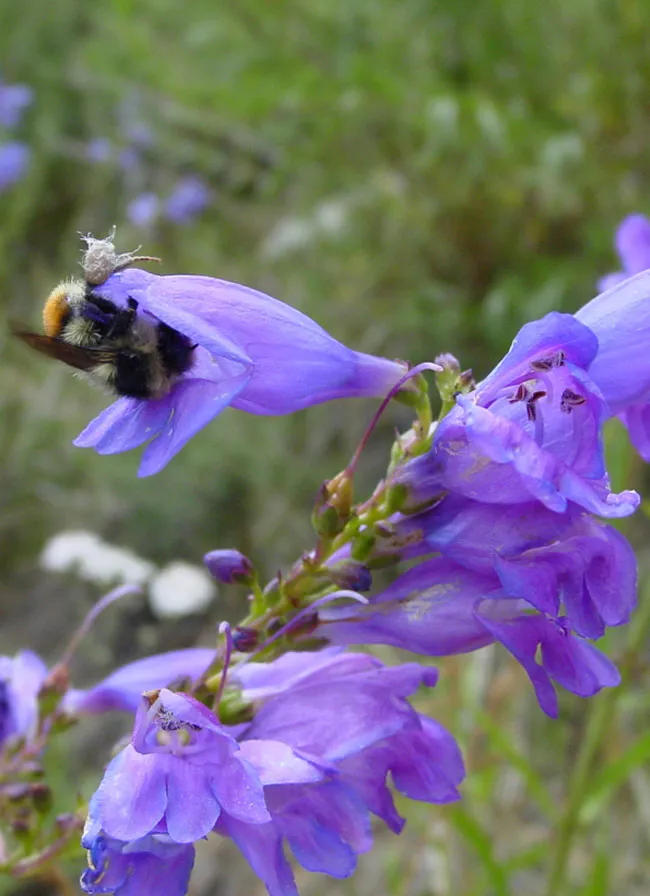
Spring's bloom may not smell so sweet anymore, as pollutants from power plants and automobiles destroy flowers' aromas, a new study suggests. The finding could help explain why some pollinators, particularly bees, are declining in certain parts of the world. Researchers at the University of Virginia created a mathematical model of how the scents of flowers travel with the wind. The scent molecules produced by the flowers readily bond with pollutants such as ozone, which destroys the aromas they produce. So instead of wafting for long distances with the wind, the flowery scents are chemically altered. Essentially, the flowers no longer smell like flowers. "The scent molecules produced by flowers in a less polluted environment, such as in the 1800s, could travel for roughly 1,000 to 1,200 meters [3,300 to 4,000 feet]; but in today's polluted environment downwind of major cities, they may travel only 200 to 300 meters [650 to 980 feet]," said study team member Jose D. Fuentes. With flowers no longer advertising their presence over as large an area, pollinators are forced to search farther and longer to pick up the hint of their scent. They may also have to rely more on their sight than what they smell. Bees depend on flower nectar for food, and if they have a hard time finding the flowers, they can't sustain their populations. Other studies, along with the experiences of farmers, have indicated that bee populations are dropping in places such as California and the Netherlands. Fuentes and his team think air pollution may be the reason. The research, funded by the National Science Foundation, is detailed online in the journal Atmospheric Environment.
- Top 10 Poisonous Plants
- How Flowers Know Spring Has Sprung
- 101 Amazing Earth Facts
Get the world’s most fascinating discoveries delivered straight to your inbox.
