













Scientists Learn Why Hope Springs Eternal

Hope springs eternal and we sing that the sun will come out tomorrow despite the lack of hard evidence to support upbeat forecasts.
Now some scientists know why. They've identified the brain clusters responsible for optimism.
Optimism is a common human trait. For instance, people tend to expect to live longer and be more successful than average, and underestimate their chances of getting divorced.
"In a class I taught with about 200 students, when I asked them how many thought they'd get married or be involved in a marriage-like relationship, many raised their hands, but when I asked how many thought they'd get divorced, only four raised their hands, and we know that's not what the odds are with divorce," said researcher Elizabeth Phelps, a neuroscientist at New York University. "Most people don't think they'll fall into the lower half of the odds."
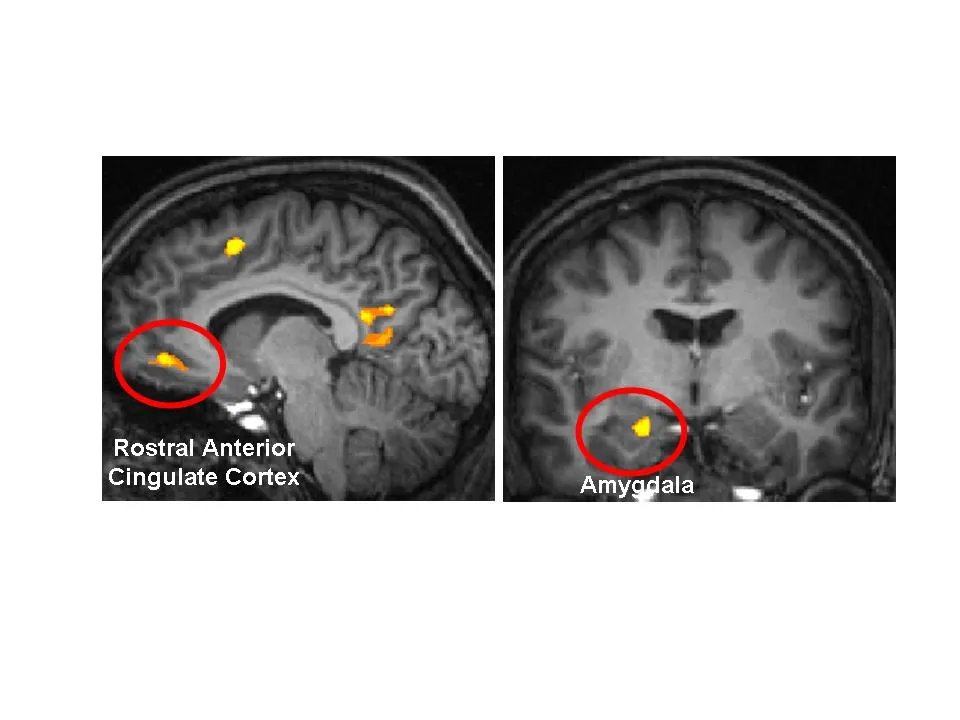
To find out how the brain generates optimism for the future, researchers at New York University scanned the brains of 15 volunteers while they imagined possible future life events, such as "winning an award" or "the end of a romantic relationship."
The scientists discovered positive future events led to increased activity in the same brain clusters that seem to malfunction in depression—the amygdala, which helps form and store emotional memories, and the rostral anterior cingulate, which helps regulate emotional responses. The researchers also found that when volunteers had optimistic personalities, as rated by psychological exams, these brain clusters activated more.
Although extreme optimism can lead people to underestimate risks and put themselves in harm's way, a moderate level of hopefulness "has been linked to physical and mental health," Phelps told LiveScience. "A little optimism helps promote actions that lead to good outcomes. Not everything in life will turn out great, but if you thought everything will turn out bad, you'd never do anything."
Get the world’s most fascinating discoveries delivered straight to your inbox.
Phelps, with neuroscientist Tali Sharot and colleagues, detailed their findings online October 24 in the journal Nature.
