













Gorilla Executions Puzzle Conservationists
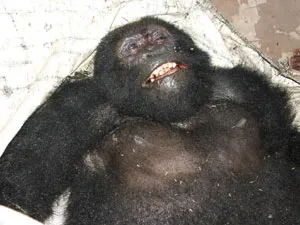
Four mountain gorillas, including one infant, were found shot to death this week in the Democratic Republic of Congo, making a total of seven killings of the critically endangered primates since January, according to researchers at the Wildlife Conservation Society.
The four gorilla carcasses were spotted in the Congo's Virunga National Park, which along with the surrounding Virunga Volcanoes Region, supports 380 mountain gorillas, or more than half of the global population. Until recently, the region was touted as one of Africa's wildlife success stories, with a rise in gorilla numbers attributed to conservation efforts by wardens.
The gorillas were part of a group regularly visited by tourists and researchers, who dubbed them the Rugendo family.
Commercial hunters sometimes kill gorillas to sell for food or trophies, and even have been known to capture live babies for the pet trade.
However, the wildlife scientists found no evidence of poaching on the four dead gorillas. For one, the bodies were left behind, and the infant was found clinging to its mother.
Some conservationists suggest the killings were meant to send a message to wardens to leave the park. Virunga has come under increasing pressure from outside exploitation, including the charcoal trade. As well, human-generated pressures, such as rapid deforestation in the region, imperil the gorillas.
“This is a senseless and tragic loss of some of the world’s most endangered and beloved wildlife,” said Deo Kujirakwinja, of the WCS's Congo Program. “This area must be immediately secured or we stand to lose an entire population of these endangered animals.”
Get the world’s most fascinating discoveries delivered straight to your inbox.
- Image Gallery: The World's Biggest Beasts
- Top 10 Species Success Stories
- Closest Human Relatives Face Extinction
Jeanna Bryner is managing editor of Scientific American. Previously she was editor in chief of Live Science and, prior to that, an editor at Scholastic's Science World magazine. Bryner has an English degree from Salisbury University, a master's degree in biogeochemistry and environmental sciences from the University of Maryland and a graduate science journalism degree from New York University. She has worked as a biologist in Florida, where she monitored wetlands and did field surveys for endangered species, including the gorgeous Florida Scrub Jay. She also received an ocean sciences journalism fellowship from the Woods Hole Oceanographic Institution. She is a firm believer that science is for everyone and that just about everything can be viewed through the lens of science.