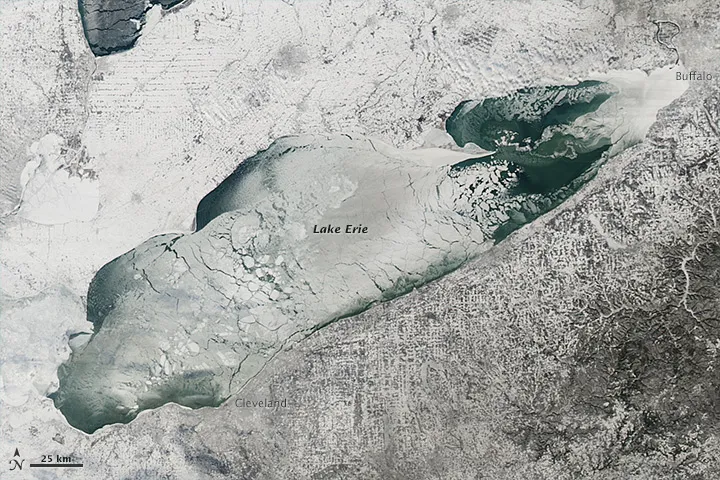
Great Lakes Go For Fully Frozen
Get the world’s most fascinating discoveries delivered straight to your inbox.
You are now subscribed
Your newsletter sign-up was successful
Want to add more newsletters?
Delivered Daily
Daily Newsletter
Sign up for the latest discoveries, groundbreaking research and fascinating breakthroughs that impact you and the wider world direct to your inbox.
Once a week
Life's Little Mysteries
Feed your curiosity with an exclusive mystery every week, solved with science and delivered direct to your inbox before it's seen anywhere else.
Once a week
How It Works
Sign up to our free science & technology newsletter for your weekly fix of fascinating articles, quick quizzes, amazing images, and more
Delivered daily
Space.com Newsletter
Breaking space news, the latest updates on rocket launches, skywatching events and more!
Once a month
Watch This Space
Sign up to our monthly entertainment newsletter to keep up with all our coverage of the latest sci-fi and space movies, tv shows, games and books.
Once a week
Night Sky This Week
Discover this week's must-see night sky events, moon phases, and stunning astrophotos. Sign up for our skywatching newsletter and explore the universe with us!
Join the club
Get full access to premium articles, exclusive features and a growing list of member rewards.
The Great Lakes are almost completely frozen over for the first time in 10 years, thanks to persistent cold weather. Ice covered 81.6 percent of the Great Lakes yesterday (Feb. 17), according to the Great Lakes Environmental Research Laboratory, part of the National Oceanic and Atmospheric Administration. The ice cover was even greater last week, reaching 88.4 percent on Friday, Feb. 14. The Great Lakes ice hasn't been this widespread since 1994, when 90.4 percent of the lakes' surface was under ice.
Though some of the lakes are more frigid than others — Lake Ontario is about 40 percent frozen, while Lake Erie is close to 100 percent covered in ice — the freeze is good news for the region. Last year saw record low water levels in the Great Lakes, but the ice cover will help lessen evaporation, one of the biggest factors in lake water loss.
The ice is also thick enough for people to reach the Apostle Islands' ice caves on Lake Superior for the first time since 2009. The National Park Service opened the ice caves to visitors in mid-January.
Read more: Great Lakes Water Levels Are in Unusual Decline
Email Becky Oskin or follow her @beckyoskin. Follow us @livescience, Facebook& Google+.
Get the world’s most fascinating discoveries delivered straight to your inbox.