













Risk of Falls, Accidents to Continue Well After Snowstorms Depart
This article was provided by AccuWeather.com.
In the wake of the recent nor'easter this past week and another snowstorm this weekend, the weather that follows days later will favor rounds of freeze and thaw cycles that can contribute to vehicle accidents and slip and fall incidents.
With the piles of snow adjacent to streets, sidewalks and parking lots, weather conditions into next week will favor the formation of ice from the Midwest to the Northeast and into parts of the South but not necessarily from an ice storm.
The list of states that have snow on the ground and snow piled up as of Valentine's Day, Feb. 14, 2014, includes North Carolina, Virginia, Maryland, Pennsylvania, New Jersey, New York, West Virginia, Illinois, Kansas, Missouri, Iowa, Indiana, Massachusetts, Connecticut and Maine. However, there are many more.
In many of these states and others, the weather in the coming days is forecast to bring temperatures above freezing by day and below freezing at night.
Drivers, pedestrians and property owners need to be on the lookout for potentially dangerous conditions that can change in a matter of minutes in some cases.
According to AccuWeather.com Senior Vice President Joseph Sobel, "With the strengthening sun this time of the year, natural melting often occurs on untreated surfaces during the daytime, even if temperatures remain near or below freezing."
Get the world’s most fascinating discoveries delivered straight to your inbox.
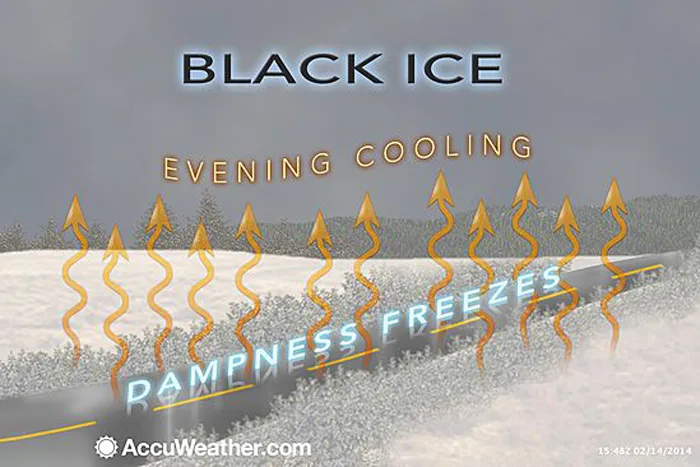
However, many times after the sun goes down, areas made wet by natural melting will freeze into a thin sheet of ice. Some people refer to this as black ice or clear ice, since it may appear wet.
"The ice can form on cold ground and in very dry air even before the sun sets in some cases," Sobel said. "Areas that are shaded from the sun during part of the day or adjacent to large banks of snow and ice can freeze quickly."
Ice may form after a rainstorm departs the area as well. In this case, the rain may have diluted any residual chemicals on sidewalks, streets and driveways.
Leaky downspouts are another source of trouble.
RELATED: Slip and Falls: How to Know When You're Liable How to Get Help If You Are Involved in an Incident AccuWeather.com Temperature Forecast Maps
Following a snowfall, property owners can best protect pedestrians and parking lot traffic by treating wet areas late in the day with ice melting compounds then treating again early in the morning, before traffic increases.
"The ground this time of year, with its extensive snow cover represents a tremendous source of cold and often temperatures will migrate back toward freezing at night, even in a warm weather pattern," Sobel said.
When temperatures are too low for chemical treatment or chemical treatment is simply not available, it is best to apply anti-skid material.
"In all cases property owners, whether it is their home, a rental unit or business have the responsibility of making walkways, driveways and parking lots they own safe," Sobel said.
If there is no way to keep these areas ice-free, signs warning of the condition should be visible at all entrance ways.
Persons that have questions regarding how soon areas have to be cleared of snow and ice following a weather event can contact AccuWeather Enterprise Solutions Forensics Department at 814-235-8626.
© AccuWeather.com. All rights reserved. More from AccuWeather.com.