














Exotic Animal Trader Arrested After Smuggling Komodo Dragons, Baby Apes

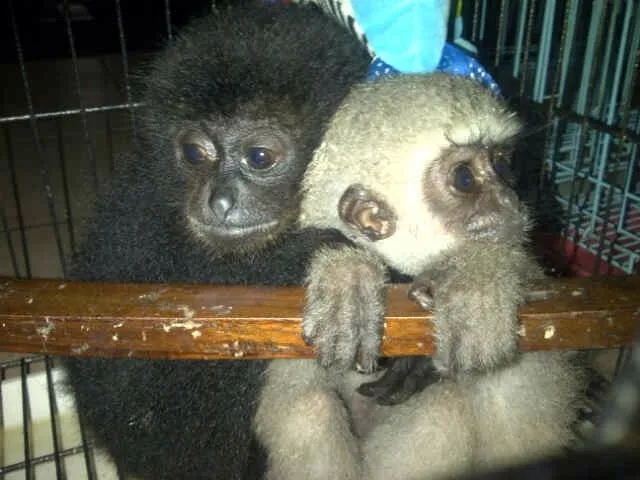
Some people smuggle drugs. Others, dragons.
Indonesian authorities cuffed a wildlife trader who allegedly trafficked komodo dragons, endangered baby primates and other live animals, the Wildlife Conservation Society (WCS) announced.
The trader, whose name was not released, was apparently linked to smuggling rings in Russia, Singapore, Thailand and Cyprus. He allegedly sent two Komodo dragons to Thailand last month and authorities say he had previously shipped threatened turtles and hornbill beaks to Singapore. When making the arrest in Bali, officials recovered four endangered Javan gibbons, four baby siamangs and two palm cockatoos.
"This arrest sends a message that Indonesia is serious about protecting its wildlife heritage from the ravages of the illegal wildlife trade," Joe Walston, WCS executive director for Asia Programs, said in a statement.
Some of the wild animals at the center of the case are in high demand by the exotic pet trade. Siamangs, for example, are often captured as infants to be sold into captivity. The Southeast Asian apes have declined by at least 50 percent over the past four decades largely due to the pet trade and habitat loss, according to the International Union for Conservation of Nature (IUCN), which lists the species as endangered.
Beyond threatening endangered wild populations, the exotic pet trade is also dangerous because it can unleash invasive species in places like Florida, where an accommodating climate allows pets (and predators) like Burmese pythons to flourish if they get loose.
Follow Megan Gannon on Twitter and Google+. Follow us @livescience, Facebook & Google+. Original article on LiveScience.
Get the world’s most fascinating discoveries delivered straight to your inbox.
