
















Tiniest Intact Ceratopsid
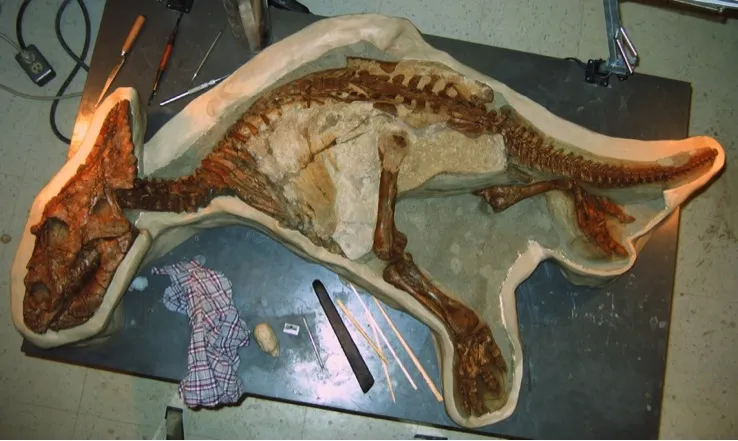
The smallest intact ceratopsid skeleton was recently unearthed in Alberta
Rich fossil site

The fossil was unearthed in Dinosaur National Park in Canada, a rich site for Cretaceous Era fossils
First impression

The team first noticed the edge of the frill sticking out of the ground. When they investigated further, they realized it was a tiny ceratopsid, just about 5-feet long.

Mostly intact

The skeleton was mostly intact, with just the front limbs missing. Because of its excellent preservation, the team believes the toddler dino drowned in a stream and was quickly buried in sediments, where it remained undisturbed for millions of years.
Chasmosaurus

The dino likely was a chasmosaurus.
Dino growth rates

The new discovery will allow the researchers to better understand how the horned dinosaurs grew over time.
Get the world’s most fascinating discoveries delivered straight to your inbox.

Tia is the editor-in-chief (premium) and was formerly managing editor and senior writer for Live Science. Her work has appeared in Scientific American, Wired.com, Science News and other outlets. She holds a master's degree in bioengineering from the University of Washington, a graduate certificate in science writing from UC Santa Cruz and a bachelor's degree in mechanical engineering from the University of Texas at Austin. Tia was part of a team at the Milwaukee Journal Sentinel that published the Empty Cradles series on preterm births, which won multiple awards, including the 2012 Casey Medal for Meritorious Journalism.