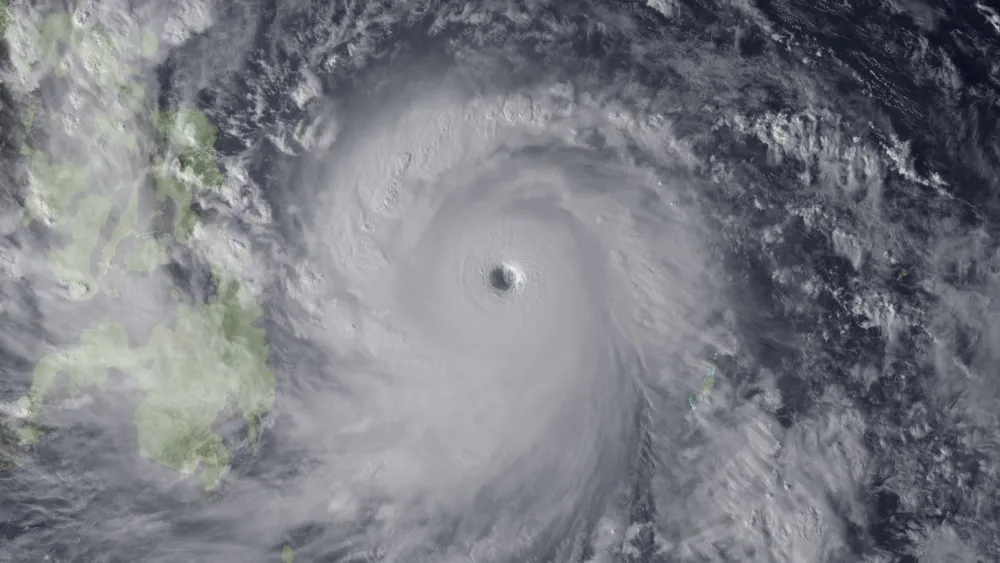
Just how strong was Super Typhoon Haiyan? There's been a lot of talk about that question, and rightfully so, since it was one of the most intense storms in the last generation. Many people (in the United States) have compared it to Hurricane Katrina — one of the most powerful storms to make an American landfall in recent years — often floating numbers as to the relative intensity of the two.
While it's impossible to precisely quantify, it is clear that Haiyan was more intense than Katrina, wrote tropical weather expert Brian McNoldy at the Capital Weather Gang, the Washington Post's weather blog.
That's primarily because the tropopause, the top of the atmospheric layer where weather occurs, is much higher and colder in the Western Pacific than in the Gulf of Mexico, McNoldy wrote. Tropical storms like typhoons are basically heat engines, and are powered by the transfer of heat energy from the warm ocean to the cold upper atmosphere. Given a greater height and bigger differential between hot ocean and cold skies, a storm will get more intense, as was the case for Haiyan, McNoldy added.
Latest Videos FromLive Science
Haiyan packed sustained winds up to 190 mph (305 km/h) in the hours before it made landfall, according to some accounts. Local estimates put the death toll of Super Typhoon Haiyan at 10,000 in the Philippines. Its storm surge reached up to 20 feet (6 m) in parts of the central Philippines.
Email Douglas Main or follow him on Twitter or Google+. Follow us @livescience, Facebook or Google+.