













Delaying Measles Vaccine May Increase Risk of Seizures

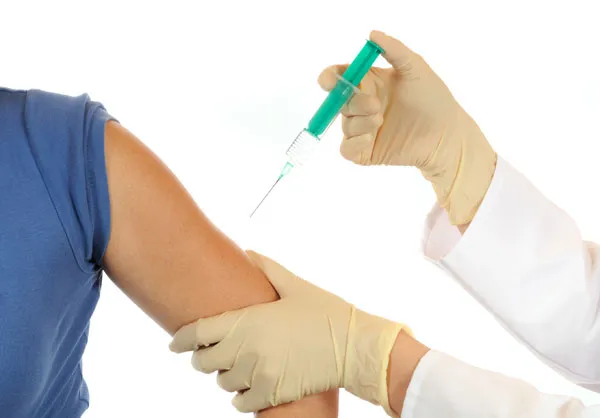
Children who receive their measles vaccination on time have a lower risk of adverse events following vaccination than those who receive the vaccine later than is recommended, a new study finds.
In the study, children who received their first dose of a measles-containing vaccine at ages 12 months to 15 months — which is recommended by the Centers for Disease Control and Prevention — had a lower risk of experiencing fever or seizures shortly after vaccination than those who received the vaccine at ages 16 months to 23 months.
Previous studies have found that measles-containing vaccines are linked with a small increased risk of seizures brought on by fever, called febrile seizures, one to two weeks after vaccination. The reason for the link is not known, but scientists suspect an increase in virus replication occurring in this one- to two-week time period may cause fever in some children. Previously, it was not known whether a child's age affected their risk of fever or seizures following measles vaccination. [5 Dangerous Vaccination Myths]
The findings "highlight the importance of timely immunization of children," the researchers, from Kaiser Permanente Vaccine Study Center in Oakland, Calif., wrote in the Oct. 14 issue of the journal JAMA Pediatrics.
Some parents delay vaccination based on the unproven idea that "too many vaccines" at once could overwhelm the child's immune system, said Dr. Paul Offit, chief of the division of infectious diseases at Children's Hospital of Philadelphia.
But that theory is unfounded, Offit said, as children's immune systems handle a wealth of challenges (such as bacteria and viruses in the environment) from the minute they are born. Children who do not receive vaccinations on time are at increased risk for catching vaccine-preventable diseases in the period when they are unvaccinated, Offit said.
The new study "just provides another reason why delaying vaccines would be an unreasonable thing to do, and potentially a more harmful thing to do," Offit told LiveScience.
Get the world’s most fascinating discoveries delivered straight to your inbox.
"If vaccine safety is a concern, the currently recommended schedule is the best choice for preventing disease and minimizing adverse events," Offit and his colleague Dr. Kristen Feemster, of the University of Pennsylvania School of Medicine, wrote in an editorial accompanying the study.
The new study analyzed information from 840,348 children ages 12 months to 23 months who had received a measles-containing vaccine (measles, mumps and rubella; or measles, mumps, rubella and varicella (chicken pox)).
Children ages 16 months to 23 months were 6.5 times more likely to experience a seizure in the seven to 10 days following vaccination than on other days. For every 10,000 children vaccinated, this risk translates to about 9.5 extra seizure cases during the weeks following vaccination than would be expected without vaccination.
In contrast, for children ages 12 months to 15 months, the risk was lower. They were about 3.4 times more likely to experience a seizure in the seven to 10 days following vaccination than on other days. For every 10,000 children vaccinated, this risk translates to about four extra seizure cases during the weeks following vaccination.
The researchers emphasize that a child's risk of experiencing a febrile seizure that requires medical attention in the weeks following vaccination is very small — less than one in 1,000. What's more, the rate of febrile seizure following vaccination is seven times lower than the rate following natural infection with measles, the researchers said.
The researchers aren't sure why the risk of febrile seizures following vaccination is higher for older children. Perhaps children ages 16 months to 23 months have a more robust immune response to the vaccine, resulting in an increased risk of seizures, the researchers said. Also, children who receive vaccines late may be more likely to have underlying medical conditions, such as a higher risk of seizures, that prompt parents to delay vaccination in the first place, the researchers said.
Most febrile seizures are benign and do not pose health risks over the long term, Offit said.
Another study published last month found that young children who miss some of their whooping-cough shots, or receive the shots late, are at an increased risk of catching the disease.
Follow Rachael Rettner @RachaelRettner. Follow LiveScience @livescience, Facebook & Google+. Original article on LiveScience.

Rachael is a Live Science contributor, and was a former channel editor and senior writer for Live Science between 2010 and 2022. She has a master's degree in journalism from New York University's Science, Health and Environmental Reporting Program. She also holds a B.S. in molecular biology and an M.S. in biology from the University of California, San Diego. Her work has appeared in Scienceline, The Washington Post and Scientific American.