













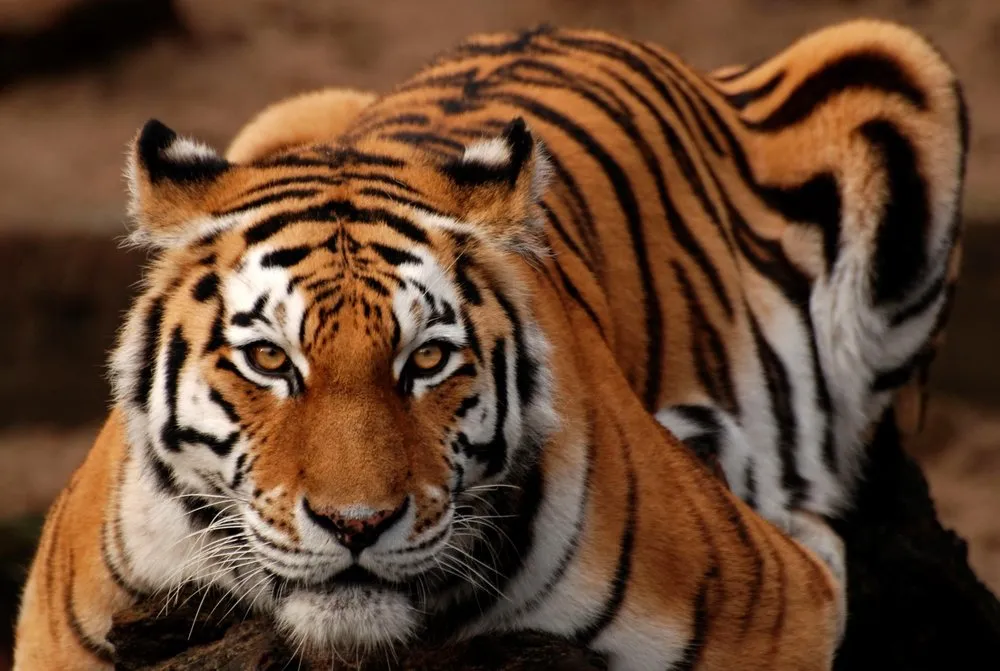
The biggest and perhaps most fearsome of the world's big cats, the tiger shares 95.6 percent of its DNA with humans' cute and furry companions, domestic cats.
That's one of the findings from the newly sequenced genomes of tigers, snow leopards and lions.
The new research showed that big cats have genetic mutations that enabled them to be carnivores. The team also identified mutations that allow snow leopards to thrive at high altitudes. [Rare Photos: Snow Leopard Babies in Dens]
The findings, detailed today (Sept. 17) in the journal Nature Communications, could help conservation efforts by preventing closely related captive animals from breeding, said Jong Bhak, a geneticist at the Personal Genomics Institute in South Korea.
Lions and tigers
Tigers are the biggest members of the cat family and are closely related to other big cats, such as snow leopards and lions. The predatory felines are critically endangered, and only 3,050 to 3,950 tigers are thought to remain in the wild. Without tiger conservation, most scientists believe the iconic orange cats will eventually go extinct.
To aid those efforts, Bhak and his colleagues sequenced the genome of a 9-year-old Amur tiger living in the Everland Zoo in South Korea. The team also acquired DNA from around the world and compared the Amur tiger genome with that of the white Bengal tiger, the African lion, the white African lion and the snow leopard.
Get the world’s most fascinating discoveries delivered straight to your inbox.
The tiger shares 95.6 percent of its genome with the domestic cat, from which it diverged about 10.8 million years ago, the comparison showed.
In addition, several genes were altered in metabolic pathways associated with protein digestion and metabolism, or how the body uses fuel like food to power cells. Those changes, which evolved over tens of millions of years, likely enable the majestic felines to digest and rely solely on meat, Bhak said.
Big cats also have several mutations that make for powerful, fast-acting muscles — a necessity when chasing down prey.
The team also found two genes in the snow leopard that allow it to thrive in the low-oxygen conditions of its high-altitude habitat in the Himalayan Mountains. Those genetic changes are similar to ones found in the naked mole rat, which also lives in low-oxygen conditions, though underground. In addition, the genetic analysis identified the mutations that give Bengal tigers and white African lions their distinctive white coats, Bhak said.
The new results could aid conservation efforts by giving scientists a tool to estimate genetic diversity in the wild.
By sequencing the genomes of tigers and other endangered cats like snow leopards, "we can find whether they are inbreeding," Bhak told LiveScience. "If their population diversity is very low, then one flu virus can kill a lot of them quickly, because they have the same genetic makeup."
Scientists can then take measures to introduce fresh blood into the population, which could make it more resilient.
The genomes can also aid captive breeding programs by helping zoos choose animals that aren't closely related for mating, he added.
Follow Tia Ghose on Twitterand Google+. Follow LiveScience @livescience, Facebook & Google+. Original article on LiveScience.

Tia is the editor-in-chief (premium) and was formerly managing editor and senior writer for Live Science. Her work has appeared in Scientific American, Wired.com, Science News and other outlets. She holds a master's degree in bioengineering from the University of Washington, a graduate certificate in science writing from UC Santa Cruz and a bachelor's degree in mechanical engineering from the University of Texas at Austin. Tia was part of a team at the Milwaukee Journal Sentinel that published the Empty Cradles series on preterm births, which won multiple awards, including the 2012 Casey Medal for Meritorious Journalism.