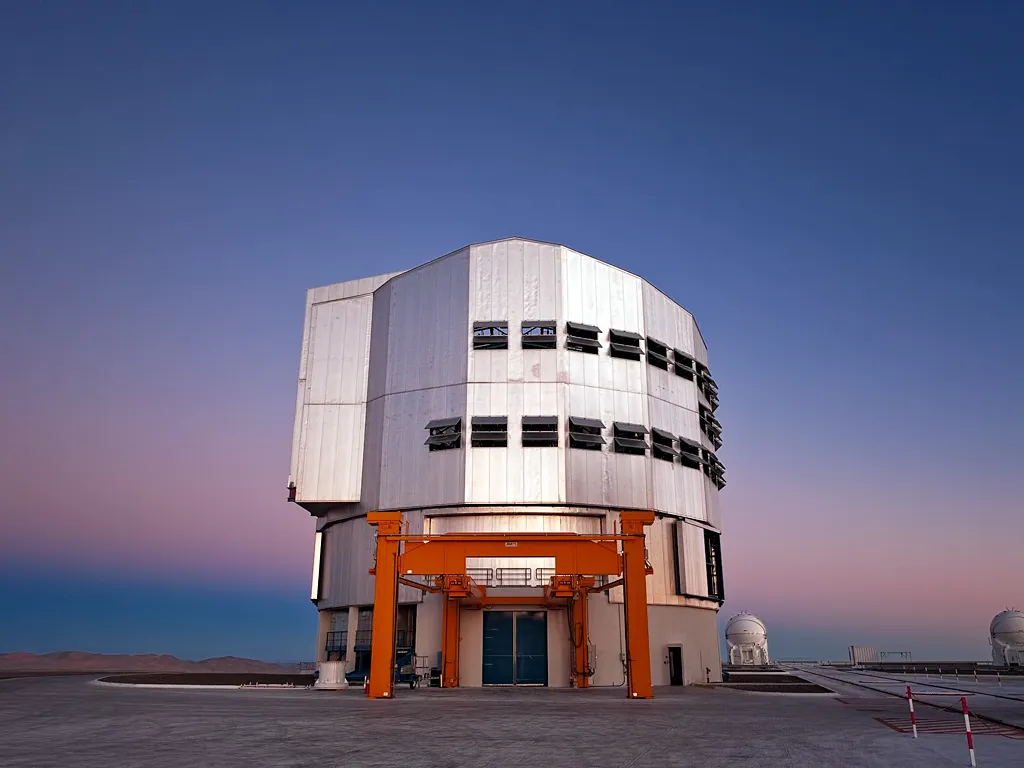
Astronomers working with the Very Large Telescope in Chile plan to announce a "major result" Wednesday (Aug. 28).
The finding relates to research on medium-size stars, scientists said. The results will "shed light on a long-standing mystery about stars like our own sun," according to a statement by the European Southern Observatory, which operates the Very Large Telescope. The results come from data collected by the UVES spectrograph on the telescope.
The project was led by Brazilian astronomers at the Institute of Astronomy, Geophysics, and Atmospheric Sciences at the University of São Paulo, and includes an international team of researchers.
Latest Videos FromLive Science
The scientists will share their discovery and discuss its implications during a press conference at 11:30 a.m. EDT (10:30 local time) at the headquarters of the Institute of Astronomy, Geophysics, and Atmospheric Sciences.
The presenters will include the following astronomers:
- TalaWanda R. Monroe (University of São Paulo)
- Jorge Meléndez (University of São Paulo)
- Claudio Melo (ESO)
The Very Large Telescope, which began taking images in 1998, sits high above Chile's Atacama Desert on Cerro Paranal. The observatory includes four telescopes, each with a main mirror 27 feet (8.2 meters) wide, which can be used together or separately.
Visit SPACE.com on Wednesday (Aug. 28) for full coverage of the announcement.
This story was provided by SPACE.com, s sister site to LiveScience. Follow Clara Moskowitz on Twitter and Google+. Follow us @Spacedotcom, Facebook and Google+. Original article on SPACE.com.