













Giant Algae Bloom Swamps Chinese Beaches

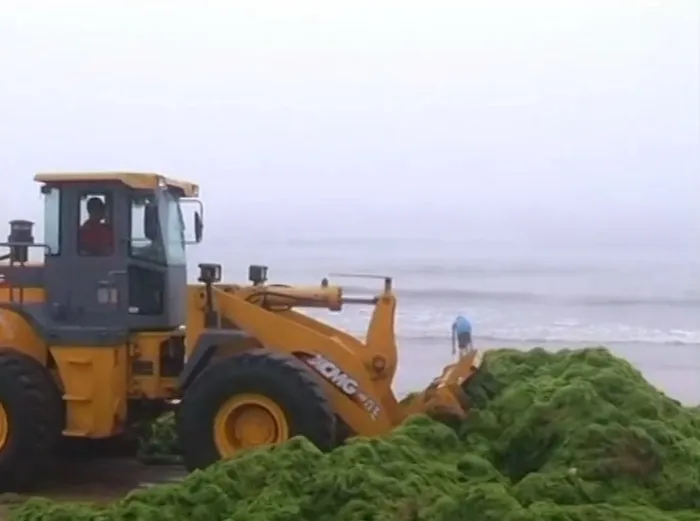
Carpets of bright green algae have overwhelmed beaches in eastern China's Shandong province due to this summer's huge Yellow Sea bloom.
Video footage from the resort city of Qingdao showed bathers braving the algae infiltration, swimming among stringy mats and carrying out handfuls of the material, known as "sea lettuce" in China, according to The New York Times.
This type of green algae, enteromorpha prolifera, is not toxic to people, but it can suck up huge amounts of oxygen, choking marine life. And when it rots, it can smell quite foul.
The bloom has become a troubling annual occurrence for the last several years in the Yellow Sea. This year's bloom has spread over an area of 7,500 square miles (28,900 square kilometers), AFP reported. Warm sea temperatures and pollution are thought to fuel the algae growth, as the organisms can feed on nutrients like phosphates and nitrates in fertilizer runoff and sewage.
Environmental and sanitation workers have been hauling away algae mats in boats and bulldozers. Officials reportedly have cleared up to 11 million pounds (5 million kilograms) of the algae each day to be dried and later used for fertilizer.
Follow Megan Gannon on Twitter and Google+. Follow us @livescience, Facebook & Google+. Original article on LiveScience.com.
Get the world’s most fascinating discoveries delivered straight to your inbox.
